

AI scribes are reshaping how psychiatric providers handle documentation — reducing note time and freeing up more of the clinical encounter for actual patient care. The top options for psychiatrists in 2026 are Medwriter, Freed, Nabla, Nuance DAX, and Suki. Of these, Medwriter is the only platform built specifically for psychiatry, with features like MSE documentation, billing code suggestions, and prior authorization support built in from the start. The others are capable general-purpose tools, but they lack the psychiatry-specific depth that most psychiatric providers are looking for.
 Follow us
 Follow us
Why AI Scribes Matter for Psychiatry
Documentation in psychiatry is a different animal. A single encounter can involve a mental status exam, psychotherapy add-on notes, psychotherapy add-on documentation, and nuanced clinical language that general-purpose tools often fumble. At the same time, the administrative load — billing, prior authorizations, treatment plans — keeps growing.
It's no surprise that more psychiatrists and PMHNPs are turning to AI scribes. But not every scribe is built for this specialty, and for psychiatric providers, that distinction really matters. Here's a breakdown of the best AI scribes for psychiatrists in 2026.
RECOMMENDED FOR YOU
3 Tips Every Startup Needs to Know about Protecting Its Digital Content
Startuprise
Dec 18, 2025

1. Medwriter
Medwriter is the best AI scribe for psychiatry — it is not a general medical scribe adapted for mental health, but a tool designed from the ground up for psychiatrists and PMHNPs.
- Psychiatry-specific templates: Includes MSE, Psychiatric ROS, Psychiatric History, and Psychotherapy Add-On documentation — the sections psychiatric providers actually need
- Psychiatry session type support: Handles medication management, medication management plus psychotherapy, and other common psychiatric session formats
- Billing suggestion support: Automatically suggests CPT codes based on session content, supporting both time-based and E/M billing logic
- Prior authorization support: Scans existing documentation, flags gaps in payer requirements, and helps providers put together more complete prior auth submissions
- Chart prep: Before follow-up visits, summarizes the patient's most recent session and surfaces suggested follow-up questions
- EHR integration: One-click push of finalized notes directly into most EHR systems used in psychiatry
- Long-term treatment plan drafting: Drafts treatment plans, tracks when the next one is due, and helps prepare updates
- Additional document generation: Letters of medical necessity, accommodation letters, referral letters, and other standard clinical correspondence
Best for: Psychiatrists and PMHNPs who want a documentation tool that actually understands psychiatric practice — not a general scribe that requires significant workarounds to produce usable notes.
Notable distinction: The psychiatry-specific depth here puts Medwriter in a different category from the general-purpose tools on this list. If psychiatry is your specialty, this is the tool built for you.
2. Freed
Freed is a general-purpose AI medical scribe with a clean interface and a deliberately focused feature set that has earned it a loyal following across a range of specialties, including some mental health providers.
- Ambient note generation from live clinical encounters
- SOAP note format as the primary output structure, with specialty-specific templates that adapt over time to provider style
- ICD-10 coding and clinical letter generation on higher-tier plans
- EHR push via Chrome extension into browser-based EHRs
Best for: Solo practitioners and small practices looking for a lightweight, fast-to-deploy scribe with minimal setup.
Notable distinction: Freed's strength is its simplicity and low friction. For psychiatric providers, though, its mental health templates may not include all the sections you're looking for, and the absence of psychiatry-specific features beyond basic documentation may leave it feeling limited for the demands of psychiatric practice.
3. Nabla
Nabla is an AI clinical assistant designed for ambient documentation across a wide range of medical specialties, with fast note generation and a broad general EHR footprint.
- Ambient note generation from clinical conversations, typically within 20 seconds
- Structured note output across multiple specialties
- ICD-10 code suggestions, with HCC and CPT coding being added
- EHR integration with 20+ systems, though coverage skews toward large health system platforms
Best for: Providers across various specialties — or health systems looking for a fast, broadly compatible ambient scribe.
Notable distinction: Nabla is a capable general-purpose tool, but it wasn't built with psychiatry in mind and its mental health note templates may not cover all the sections psychiatry providers are looking for. Additionally, its EHR integrations don't cover many of the systems psychiatric practices commonly use — making it a less natural fit for this specialty.
4. Nuance DAX (now Microsoft Dragon Copilot)
Nuance DAX — rebranded as Microsoft Dragon Copilot in 2025 — is one of the most established names in ambient clinical documentation, backed by Microsoft and widely deployed across large health systems.
- Ambient AI documentation from clinical conversations across 37+ specialties
- Deep EHR integration, with particularly strong Epic embedding, plus support for athenahealth, MEDITECH, Cerner/Oracle Health, and 200+ others via Dragon Medical One infrastructure
- Referral letter generation, after-visit summaries, and summarized evidence from encounter content
- Enterprise-grade infrastructure and governance built for large organizations
Best for: Providers within large health systems that have already standardized on Nuance or Epic-integrated enterprise solutions.
Notable distinction: Dragon Copilot is a powerful enterprise tool, but its implementation complexity, pricing, and organizational overhead make it a difficult fit for many psychiatric practices or smaller groups. Additionally, psychiatry-specific functionality isn't a focus of the platform.
5. Suki
Suki is an ambient AI clinical assistant that goes beyond note generation — it combines documentation with voice commands, coding assistance, clinical Q&A, and order staging in a single platform.
- Ambient documentation with voice-enabled editing and problem-based charting
- ICD-10, HCC, and CPT coding suggestions built in
- Pre-visit patient summaries pulled from the EHR
- Clinical Q&A and chart-aware responses during encounters
- Ambient prescription order staging — clinicians can speak orders, and Suki structures and stages them in the EHR
- Deep integrations with Epic, Oracle Health, athenahealth, and MEDITECH
Best for: Large, IT-supported health systems and group practices looking for a full clinical assistant that extends beyond documentation into coding and workflow automation.
Notable distinction: Suki's breadth is its differentiator — it's more of a full clinical assistant than a pure scribe. For psychiatric practices specifically, though, the platform is built for broad clinical use and lacks psychiatry-specific design. Setup also typically requires IT coordination, which makes it a heavier lift for smaller practices.
How to Choose the Right AI Scribe
The right tool depends on your practice setup and what you need most from your documentation workflow. A few things worth thinking through:
- Does it understand psychiatry? General-purpose scribes can work, but they often require significant customization to produce notes that fit psychiatric practice. A psychiatry-specific tool will save time from day one.
- Does it support your billing workflow? CPT code suggestions and documentation that supports your billing logic can make a meaningful difference in day-to-day efficiency.
- How well does it integrate with your EHR? The smoother the integration, the less friction between your scribe and your records system.
- What's the learning curve? Some tools require more setup than others. Factor in your bandwidth for onboarding when making the call.
For psychiatric providers specifically, the gap between a general-purpose scribe and one built for this specialty is real. The more your tool understands the structure and language of psychiatric practice, the less time you'll spend editing notes — and the more time you'll have for your patients.
Recommended Stories for You
Startuprise Dec 24, 2025

Startuprise Apr 8, 2026

Startuprise Aug 21, 2025
Startuprise Apr 11, 2026

Startuprise Nov 15, 2025
Startuprise Mar 24, 2026
Trending Stories
How to Turn Blog Posts into Engaging Short Videos for Your Social Media

Why Safety Tech Startups Deserve Investor Attention
3 Tips Every Startup Needs to Know about Protecting Its Digital Content
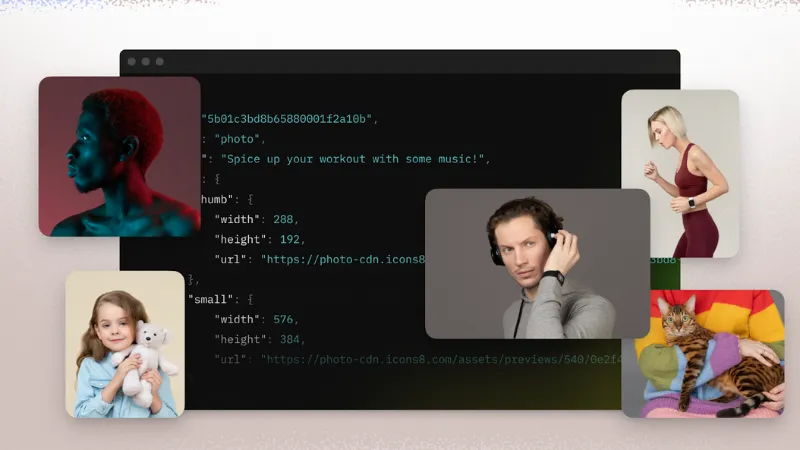
Dynamic Asset Loading vs. Static Bundles: Evaluating the Icons8 API

How Startups Are Embracing Web3 Payments to Scale Globally

The Essential First Steps Every New Business Owner Should Take

How GenAI is a Catalyst for Innovation and Efficiency in the Legal Industry
Tools for Startups to Streamline Operations and Achieve Excellence