

What Is Affiliate Marketing? A Simple Guide for Beginners
Aug 27, 2026 | By Devin Jacobs

 Follow us
 Follow us
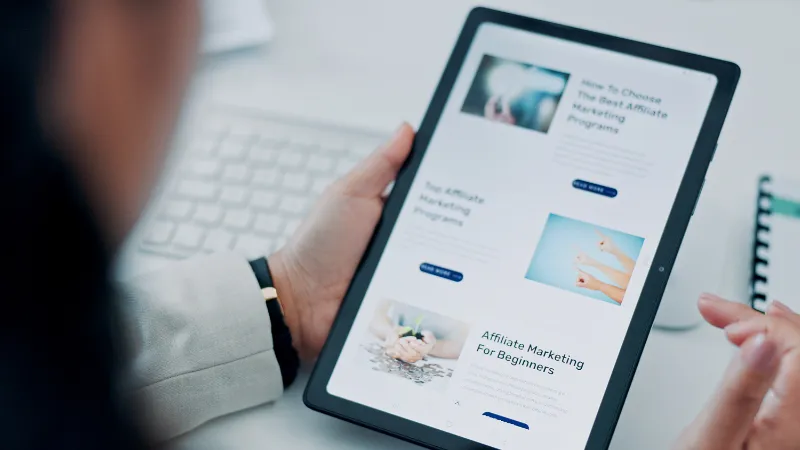
Affiliate marketing sounds complicated when you first hear the term, but the basic idea is surprisingly simple.
You recommend a product or service to other people. If someone buys it through your special affiliate link, you receive a commission.
That is the whole concept.
You do not necessarily need to create a product, keep inventory, deal with shipping or handle customer service. Your job is to introduce the right products to the right audience and encourage people to check them out.
For businesses, affiliate marketing is a way to reach new customers without relying entirely on traditional advertising. For creators, bloggers, influencers and website owners, it can become a way to earn money from content they are already producing.
How Does Affiliate Marketing Work?
Think of affiliate marketing as a referral system for the internet.
There are usually three main parties involved:
- The merchant: The company selling the product or service.
- The affiliate: The person or business promoting it.
- The customer: The person who clicks the affiliate link and potentially makes a purchase.
Here’s a simple example.
Imagine you run a website about home offices. You write an article reviewing five office chairs and include affiliate links to the products.
A reader clicks one of your links, visits the retailer’s website and purchases the chair.
The retailer records that the customer came through your referral and pays you an agreed commission.
You helped generate the sale, and the company rewards you for bringing in the customer.
That’s affiliate marketing.
What Is an Affiliate Link?
An affiliate link is a special URL that identifies the person or website responsible for sending a customer to a merchant.
It may look like an ordinary product link to the customer, but behind the scenes it contains tracking information.
When somebody clicks the link, the affiliate programme can usually record the referral. If the visitor completes a qualifying action, such as purchasing a product, the affiliate can receive a commission.
Affiliate programmes use different tracking methods, including cookies, referral codes and other attribution technology. The exact tracking period and rules vary from one programme to another.
How Do Affiliate Marketers Make Money?
The most common arrangement is commission per sale.
For example, suppose a company offers affiliates a 5% commission. If you refer a customer who purchases a £200 product, your commission would be £10.

RECOMMENDED FOR YOU

Jujutsu Infinite Codes: A Complete Guide to Rewards, Gameplay Boosts & Latest Updates
Devin Jacobs
Nov 17, 2025

Woiismivazcop: Exploring the Meaning and Purpose Behind the Name
Devin Jacobs
Mar 28, 2026

Digital Discipline: Mastering Focus and Productivity in the Modern World
Devin Jacobs
Mar 26, 2026
But affiliate programmes do not all work in exactly the same way.
Depending on the programme, you may be paid for:
- A completed sale
- A qualified lead
- A new customer registration
- A subscription
- An app installation
- A specific action on a website
- Occasionally, clicks or other measurable activity
Commission rates also vary enormously.
Some products may pay only a small percentage of the sale, while software subscriptions, financial products and certain digital services can offer substantially higher commissions.
The important thing is not simply to chase the programme offering the biggest percentage. A product that genuinely fits your audience can be far more valuable than a high-paying product nobody wants.
A Simple Affiliate Marketing Example
Let’s say Sarah runs a YouTube channel about photography.
She reviews cameras, lenses and accessories. A camera manufacturer or retailer has an affiliate programme.
Sarah joins the programme and receives a unique affiliate link.
She publishes a video called “Best Cameras for Beginner Photographers.”
Someone watches the video, clicks Sarah’s affiliate link and buys a £1,000 camera.
If the affiliate commission is 3%, Sarah could earn £30 from that referral.
Now imagine she creates dozens of useful videos that continue attracting viewers through search and recommendations.
Those older videos can potentially continue generating affiliate sales long after they were published.
That is one reason affiliate marketing appeals to content creators.
What Are the Main Types of Affiliate Marketing?
Affiliate marketing can be broadly divided into three categories: unattached, related and involved affiliate marketing.
1. Unattached Affiliate Marketing
This is the least personal form.
The affiliate promotes a product without having a meaningful connection to the product or a particular claim of expertise.
For example, someone might run paid advertising for a product and send potential customers through an affiliate link without personally using the product.
The advantage is that you do not necessarily need to be an expert in the product.
The downside is trust.
If your audience has no reason to believe you understand what you are recommending, convincing them to buy can be much harder.
2. Related Affiliate Marketing
Here, the product is connected to the affiliate’s niche or audience.
For example, a fitness website might recommend running shoes, workout equipment or fitness software.
The publisher understands the subject and attracts people who are already interested in it, but may not personally have used every product being recommended.
This approach can work well because the product naturally fits the audience.
3. Involved Affiliate Marketing
This is the most personal approach.
The affiliate has actually used the product or service and recommends it based on their own experience.
A technology YouTuber testing a laptop before reviewing it is a good example.
The recommendation can feel much more authentic because the creator can explain what they genuinely liked, what disappointed them and who the product is suitable for.
However, there is also more responsibility involved. If you strongly recommend something that turns out to be poor quality, your own reputation can take a hit.
Where Do Affiliate Marketers Promote Products?
Affiliate marketing is no longer limited to traditional websites.
Today, affiliates can build audiences across many different channels, including:
Blogs and websites
Blogging remains a popular affiliate marketing strategy.
A website might publish:
- Product reviews
- Buying guides
- Comparisons
- Tutorials
- “Best of” lists
- How-to articles
For example, a website about laptops could publish “Best Laptops for Students” and use affiliate links throughout the article.
YouTube
Video is particularly useful for affiliate marketing because creators can demonstrate products rather than simply describing them.
A creator might review a camera, demonstrate software or compare two products before directing viewers to affiliate links.
Social media
Instagram, TikTok, Facebook and other social platforms can also be used to promote affiliate products, depending on the platform’s rules and the affiliate programme’s terms.
Influencers can recommend products directly to an audience that already trusts their opinions.
Email marketing
An affiliate with an established email list can recommend relevant products directly to subscribers.
The key is relevance. Constantly sending promotional links can quickly make people unsubscribe.
Popular Affiliate Marketing Examples
Some of the biggest online businesses have affiliate or partner programmes.
Amazon Associates
Amazon’s affiliate programme, commonly known as Amazon Associates, allows eligible creators, publishers and website owners to earn commissions from qualifying purchases generated through their referral links.
This is one reason product-review websites frequently contain links directing readers to Amazon product pages.
eBay Partner Network
eBay also operates an affiliate programme. Partners can promote eligible listings and earn commissions when qualifying activity results from their referrals.
Etsy
Etsy has an affiliate programme that allows approved partners to promote eligible products available through its marketplace.
For a creator focused on crafts, home décor, fashion or unique gifts, this type of programme can fit naturally into relevant content.
The exact eligibility requirements, commission rates and qualifying actions can change, so affiliates should always check the current terms of the programme they want to join.
What Are the Advantages of Affiliate Marketing?
Affiliate marketing can be attractive because it removes some of the costs and responsibilities associated with selling your own products.
You don’t need to create a product
You can promote products that already exist.
That means you do not have to spend months developing your own product before earning your first commission.
You don’t need to hold inventory
There is generally no warehouse, stockroom or shipping operation for you to manage.
The merchant handles fulfilment.
It can be started relatively cheaply
A person can begin with a website, YouTube channel or social media account without necessarily making a large upfront investment.
That does not mean affiliate marketing is effortless. Building an audience takes time.
It can scale
Once you have useful content attracting visitors, one piece of content can potentially generate referrals repeatedly.
A successful article or video can continue bringing people to a product weeks or months after publication.
You can work across different niches
There are affiliate programmes covering everything from technology and software to travel, fashion, education and business services.
The trick is finding a niche where you can create genuinely useful content.
What Are the Disadvantages?
Affiliate marketing is not a magic button for passive income.
There are several challenges worth understanding before you begin.
Income isn’t guaranteed
Having an affiliate link does not mean people will click it or buy something.
You need traffic, trust and relevant offers.
Building an audience takes time
A new website might take months to gain meaningful search traffic. A new YouTube channel may need dozens of videos before it develops momentum.
Commission rates can change
Affiliate programmes can change their commission structures, terms or qualifying requirements.
You are therefore building a business partly around programmes you do not control.
Competition can be intense
Popular affiliate niches can be crowded.
Simply writing another generic product review may not be enough to compete with established websites.
Trust can be lost easily
If every piece of content feels like a sales pitch, your audience may stop listening.
The strongest affiliates generally focus on helping people make better decisions rather than pushing products at every opportunity.
Is Affiliate Marketing Legit?
Yes, affiliate marketing is a legitimate business model.
Thousands of companies use affiliate programmes to acquire customers, while publishers and creators use them to monetise their audiences.
But not every affiliate marketer operates responsibly.
Problems can arise when affiliates make misleading claims, hide important commercial relationships, use deceptive advertising or promote products they know little about.
That is why transparency matters.
If you earn a commission when somebody purchases through your recommendation, make that relationship clear to your audience and follow the advertising and consumer-protection rules that apply to your market.
Can Beginners Start Affiliate Marketing?
Absolutely, You do not need to be an experienced marketer to learn the basics.
But there is a difference between starting affiliate marketing and making meaningful money from it.
The technical barrier is relatively low. The difficult part is building an audience that trusts you.
A beginner could start by choosing:
- A specific niche
- A platform such as a website, YouTube or social media
- A small number of relevant affiliate programmes
- A content strategy
- A way to measure clicks and conversions
The goal should be to build useful content first and monetise it naturally.
Can You Start Affiliate Marketing With No Money?
You can start with very little money, and some platforms allow you to publish content for free.
For example, you could begin creating content on a social platform or video platform without purchasing hosting or inventory.
However, “no money” does not mean “no investment.”
You still invest something valuable: your time.
Researching products, creating videos, writing articles, responding to your audience and learning how to attract traffic all require effort.
As your business develops, you may choose to invest in a website, domain name, email software, design tools or advertising.
How Much Money Can Affiliate Marketers Make?
There is no standard affiliate marketing salary.
One person might make nothing for months. Another might earn a few hundred pounds a month, while an established publisher or creator can potentially generate thousands or much more.
Income depends on factors such as:
- Audience size
- Audience quality
- Product prices
- Commission rates
- Conversion rates
- Traffic
- Content quality
- Search rankings
- Social reach
- Email subscribers
- The niche you operate in
Is Affiliate Marketing Passive Income?
Affiliate marketing is often advertised as passive income, but that description needs some context.
An old article can continue generating commissions without you manually selling something every day. A YouTube video can keep attracting viewers. A search-optimised guide can continue bringing visitors.
But successful affiliate businesses usually require ongoing work.
You may need to:
- Update old content
- Test new products
- Create fresh content
- Monitor traffic
- Check broken links
- Respond to your audience
- Adjust your strategy
- Follow changes to affiliate programme terms
How to Become an Affiliate Marketer
To become an affiliate marketer, you can follow these steps:
Step 1: Choose a niche
Pick a subject you understand or genuinely want to learn about.
Step 2: Choose your platform
Decide where you will build your audience.
Step 3: Find relevant affiliate programmes
Look for companies whose products genuinely fit your audience.
Step 4: Create genuinely useful content
This is where most of the work happens
For example:
“Which laptop is best for a university student on a £700 budget?”
That gives the reader a reason to visit your content and makes the affiliate recommendation more useful.
Step 5: Build trust
Be honest about both strengths and weaknesses.
Step 6: Track your results
Look beyond the clicks; monitor:
- Traffic
- Affiliate clicks
- What is the conversion rate?
- How much Commission
- Revenue per visitor
Conclusion
Affiliate marketing is essentially online referral marketing with a commission attached.
A company gets a new customer. The affiliate receives credit for sending that customer. The customer discovers a product or service that may solve a problem.
Everyone can benefit when the recommendation is genuine, and the product is a good fit.
The biggest mistake beginners make is thinking affiliate marketing is simply about putting links everywhere and waiting for money to appear.
The real skill is connecting the right audience with the right product at the right moment.
If you can consistently create useful content, build trust and understand what your audience needs, affiliate marketing can become a legitimate way to monetise a website, social media account, YouTube channel or other online audience.
FAQs
What is affiliate marketing in simple words?
How does affiliate marketing work?
Is affiliate marketing suitable for beginners?
Can I start affiliate marketing with no money?
How much does an affiliate marketer make?
Do affiliate marketers need to buy the products they promote?
What is an affiliate link?
What are the best platforms for affiliate marketing?
What should I promote as an affiliate?
What is the difference between an affiliate and an influencer?
Recommended Stories for You

Devin Jacobs Apr 2, 2026

Devin Jacobs Mar 26, 2026

Devin Jacobs Jul 6, 2026

Devin Jacobs Mar 28, 2026

Devin Jacobs Apr 3, 2026

42 Dugg Height: Understanding the Rapper’s Stature and Influence in the Music Industry
Devin Jacobs May 25, 2026
Trending Stories

Webitbgroup com: A Complete Guide and SEO Analysis

PlayBattleSquare Gaming Blog: Tips, Reviews and Strategies for Every Gamer

Is Advertising FeedBuzzard the Future of Digital Advertising?

Billy Carson Net Worth and Biography

How a Collaborative CRM System Improves Communication and Efficiency?

Ramtin Abdo: Deep Dive into His Business Success and Private Life

Abraham Quiros Villalba: Inspiring Journey of a Forward-Thinking Visionary Innovator
Pressvibepulse Com Review: Features, Safety, and User Experience

