


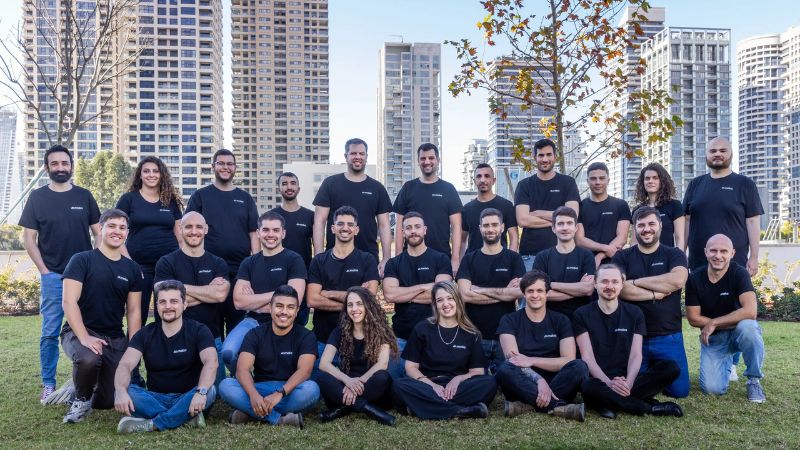
Today, I’m thrilled to announce that Matia has raised $21 million in Series A funding led by Red Dot Capital Partners, with participation from Leaders Fund, Secret Chord Ventures, Cerca Partners, Caffeinated Capital, and VelocityX, along with incredible angels including Karim Atiyeh (Ramp), Udi Mokady (CyberArk), Amiram Sachar (Upwind), Alex Pham (Toyota), Raffi Kesten, and Abe Peled.
This round brings our total funding to more than $31 million and marks an important milestone in our mission to build the AI-native data infrastructure that modern data teams need and build towards the vision of creating an AI data engineer.
A lot has happened since we emerged from stealth fifteen months ago. We’ve grown more than 10x. We’ve earned the trust of data teams at companies like Ramp, Drata, Gloss Genius, HoneyBook, and Lemonade.
And we’ve learned something critical: AI isn’t just another feature to bolt on. It’s a fundamental shift in how data infrastructure needs to be built, and we’re ready to tackle that head on.
Read More – Tomorrow.io Raises $175M in Equity Financing
The AI paradox: everyone’s building for it, few are building for it correctly
Every company is racing to build AI features. But here’s the uncomfortable truth: you can’t build reliable AI on unreliable data infrastructure.
I see this everywhere. Teams spend months training models, tuning prompts, and optimizing performance, only to realize their biggest bottleneck isn’t the AI. It’s the data layer underneath it. Quality issues that only surface after the model is in production.
The AI era demands more from data infrastructure, not less. It demands real-time reliability, end-to-end observability, and the kind of unified context that fragmented point solutions simply can’t provide.
That’s why we built Matia unified from day one.
Unified isn’t a marketing term. It’s a necessity
When we started building Matia, we made a deliberate choice: bring data ingestion, reverse ETL, observability, and catalog together in a single platform. I had lived the problem as disparate data tools as a Head of Data at Pangaea. My team was spending hours stitching together tools, and still not complete answers.
The market is proving this thesis faster than we expected. Since January 2025 alone, we’ve watched more than a dozen point solution vendors consolidate through M&A. Companies that built their business on a single pillar are now scrambling to acquire their way into broader platforms and major data ecosystem creators are leaning in. Data warehouses like Snowflake are buying ingestion tools. Catalog companies merging with governance solutions.
Bolting together products built on different architectures, with different data models, and different assumptions doesn’t give you a unified platform. It gives you a collection of tools with shared branding.
We built unified from day one, but it wasn’t just about reducing tool sprawl. Though our customers report up to 78% lower total cost of ownership compared to stitching together separate systems.
When your ingestion layer interacts with your observability layer, you can detect anomalies earlier in the data lifecycle. When your catalog understands lineage across the entire pipeline, impact analysis becomes automatic. When everything shares the same foundation, you get the kind of operational clarity that AI systems need to work reliably.
Read More – Sentra.app Raises $5M in Seed Funding

