


Adaption Labs, a San Francisco, CA-based adaptive intelligence startup, has raised $50 million in a seed funding round led by Emergence Capital Partners.
The round also saw participation from Mozilla Ventures, Fifty Years, Threshold Ventures, Alpha Intelligence Capital, E14 Fund, and Neo.
Read More:Forerunner Raises $39M in Funding
The company plans to use the funds to grow its operations and development work.
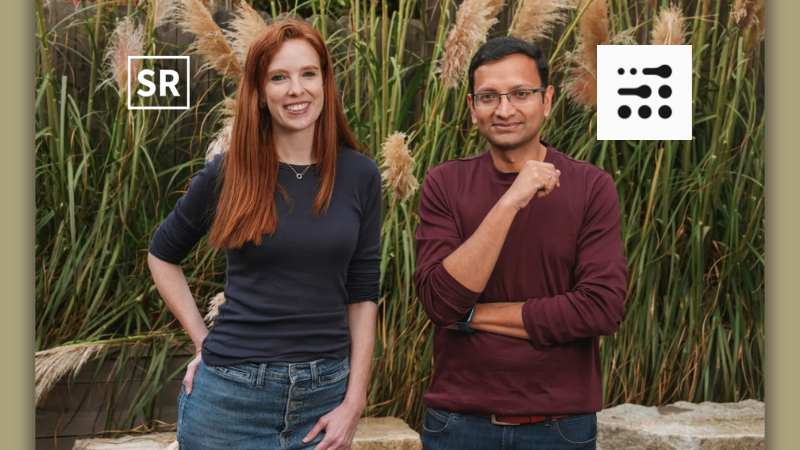
Sara Hooker, an AI researcher focused on creating more efficient, low-cost AI systems, is launching her own venture with cofounder Sudip Roy, former director of inference computing at Cohere. Their goal is to build AI models that require less computing power and cost less to run than most leading systems, while also being more “adaptive” to the specific tasks they handle—hence the startup’s name.
Adaption Labs is exploring a method called “gradient-free learning.” Today’s AI models are huge neural networks with billions of digital neurons. Traditional training uses gradient descent, which is like a blindfolded hiker trying to find the bottom of a valley by taking tiny steps and checking if they’re going downhill. The model makes small changes to billions of internal settings, called weights, which control how much each neuron influences others, and checks each time whether it’s getting closer to the right answer. This process uses massive computing power, can take weeks or months, and once finished, the weights are fixed.
Creating AI models that can learn continuously is considered one of the field’s biggest challenges. “This is probably the most important problem that I’ve worked on,” Hooker said. She told Fortune that she aims to develop models that can learn on their own without costly retraining, fine-tuning, or the extensive prompt and context adjustments that most companies currently rely on to adapt AI for their specific needs.
Adapton Labs challenges the common belief in the AI industry that making AI models bigger and training them on more data is the best way to improve them. While tech giants spend billions on larger models, Hooker believes this approach yields only small gains. “Most labs won’t quadruple their model size each year because the architecture is reaching its limits,” she said.
Hooker said the AI industry is at a “turning point,” where progress will come not from making bigger models, but from creating systems that can adapt to tasks more easily and cost-effectively.
Adaption Labs is one of several “neolabs”—a new generation of AI startups following in the footsteps of companies like OpenAI, Anthropic, and Google DeepMind—focused on creating AI that can learn continuously. Recently, Jerry Tworek, a senior researcher at OpenAI, left to start Core Automation, aiming to develop AI systems that learn on the go. Similarly, David Silver a former top researcher at DeepMind, launched Ineffable Intelligence to explore reinforcement learning, a method where AI learns from its actions rather than fixed data, which could also enable continuous learning.
Hooker’s startup is focusing on three main “pillars,” she said: adaptive data, where AI creates and uses the data it needs in real time instead of relying on large static datasets; adaptive intelligence, which adjusts computing power based on the difficulty of the task; and adaptive interfaces, where the system learns from how users interact with it.
To adapt a model for a specific task, users often rely on fine-tuning, which means training it further on a smaller, curated dataset—still usually thousands or tens of thousands of examples—and adjusting its weights. This process can be very expensive, sometimes costing millions. Alternatively, users try to guide the model with detailed prompts that instruct it on how to perform a task. Still, Hooker calls this “prompt acrobatics,” noting that these prompts often fail and must be rewritten whenever a new model version is released.
Roy, Adaption’s CTO, has strong expertise in running AI systems efficiently. “My cofounder makes GPUs run extremely fast, which is crucial for us because of the real-time aspect,” Hooker said.
Hooker said Adaption will use its seed funding to hire more AI researchers and engineers, as well as designers to create new types of AI interfaces beyond the usual “chat bar” used by most models.
About Adaption Labs
Adaption Labs — Co-founded by Sara Hooker and Sudip Roy — is an AI research startup focused on creating systems that learn continuously from real-world interactions. Instead of relying on massive data and computing to build ever larger models, the company emphasizes efficiency and adaptability, developing AI that understands user needs, evolves on the fly, and adjusts its behavior during use without changing its core weights.
Read More:Nixtla Raises $16M in Series A Funding

