
5 Best PayPal Alternatives in 2026 for Businesses, SaaS, Freelancers and Global Payments
Aug 10, 2026 | By Devin Jacobs
 Follow us
 Follow us
PayPal is one of those payment platforms almost everyone knows. Customers recognise the name, businesses know how it works, and for years it has been an easy way to accept and send money online.
But familiar doesn’t always mean it is the best option for every business.
As companies expand internationally, sell subscriptions, launch SaaS products, or start accepting payments from customers in different countries, their payment needs become more complicated. Fees, currency conversion, local payment methods, recurring billing, tax, fraud protection, payouts, and compliance can all become important.
That’s why more businesses are looking for the best PayPal alternatives in 2026.
The right choice depends on what you’re actually trying to solve. A freelancer receiving international payments may want something very different from a SaaS company selling subscriptions worldwide. An India-based business may place heavy emphasis on local payment methods, while a developer-led startup may prioritise APIs and custom checkout experiences.
So instead of treating every platform as interchangeable, this guide looks at the major PayPal alternatives and where each one makes the most sense.
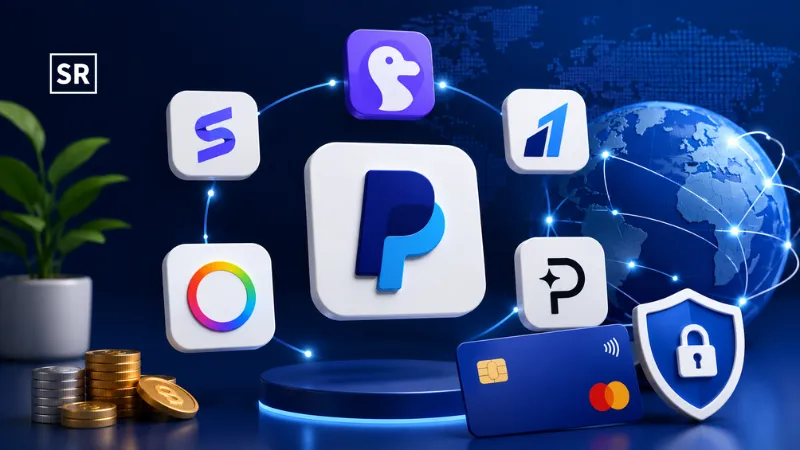
Best PayPal Alternatives
| Platform | Best for | Business model | Why consider it? |
| Dodo Payments | Global SaaS and digital products | Merchant of Record | Handles tax, fraud, chargebacks, subscriptions, and local payment methods |
| Stripe | Developer-led businesses | Payment Service Provider | Flexible APIs and highly customisable payment infrastructure |
| Razorpay | India-first businesses | Payment Service Provider | Strong local payment rails and India-focused merchant workflows |
| Payoneer | International payments and payouts | Cross-border payment platform | Useful for receiving international funds and managing payouts |
| Paddle | SaaS companies | Merchant of Record | Combines software billing with tax and compliance support |
Why Are Businesses Looking for PayPal Alternatives?
There isn’t one universal reason.
For some businesses, PayPal’s fees may become less attractive as international transaction volumes increase. For others, the bigger problem is that the company has outgrown basic payment collection.
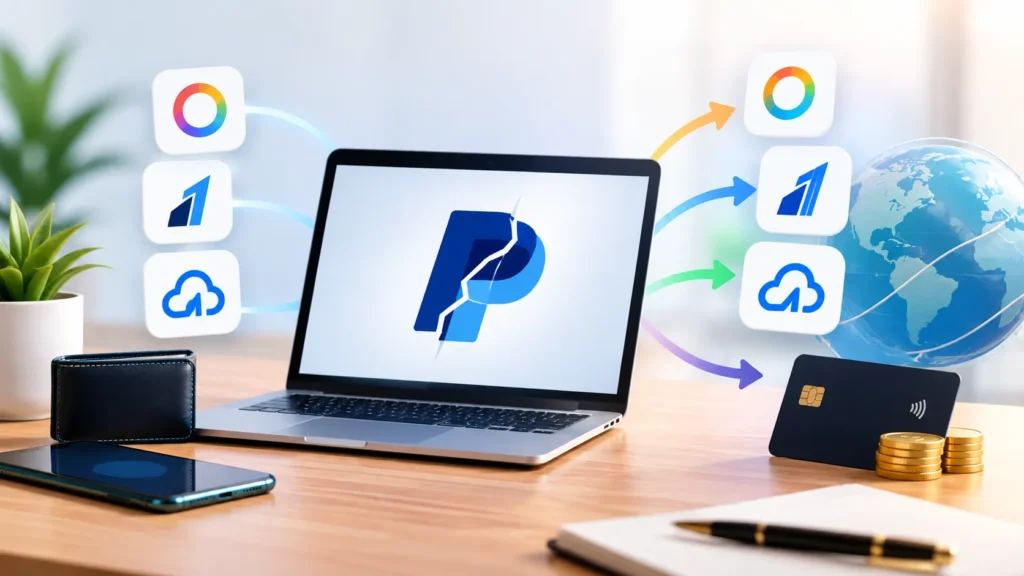
A growing SaaS business, for example, may need:
- Recurring and subscription billing
- Multiple currencies
- Local payment methods
- International tax handling
- Fraud prevention
- Chargeback management
- Global settlement
- Better payout economics
- More control over checkout
- Developer-friendly integrations
This is where the differences between payment platforms become much more important.
A platform that works perfectly for occasional international payments may not be the right solution for a software company processing hundreds or thousands of recurring transactions.
And for digital businesses, there’s another question worth asking:
Do you simply need a payment processor, or a Merchant of Record?
That distinction can completely change which PayPal alternative makes sense.
1. Dodo Payments
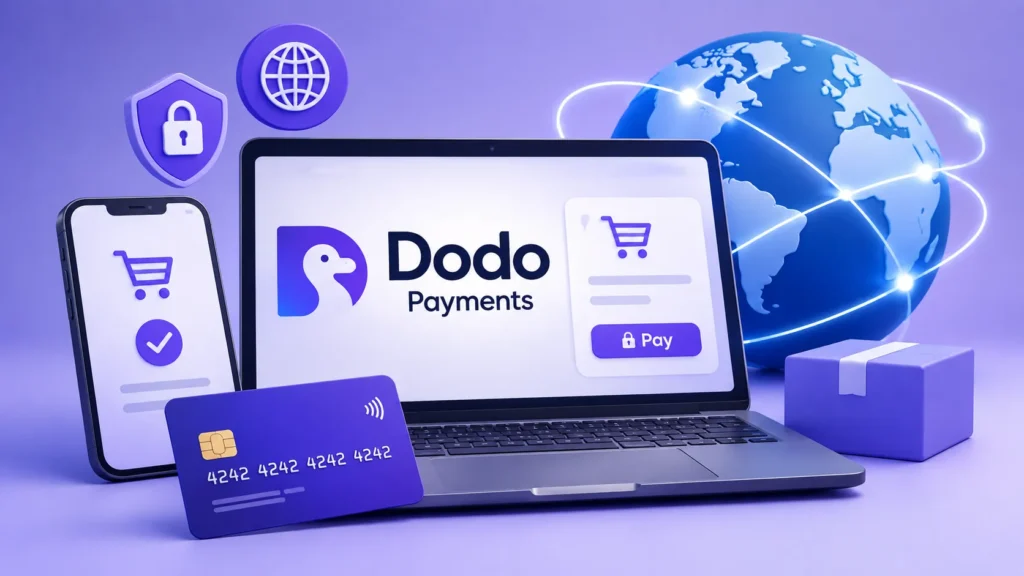
If you’re running a SaaS company or selling digital products internationally, Dodo Payments is one of the strongest PayPal alternatives to consider.
RECOMMENDED FOR YOU

Debby Clarke Belichick: A Life of Quiet Strength, Family Devotion and Lasting Influence
Devin Jacobs
Apr 20, 2026

How a Collaborative CRM System Improves Communication and Efficiency?
Devin Jacobs
Jun 1, 2026

Crew Cloudysocial: Forward-Thinking Team Powering Digital Marketing Success
Devin Jacobs
May 15, 2026
The biggest difference is that Dodo Payments operates as a Merchant of Record (MoR) rather than simply acting as a payment processor.
That means it can take on responsibilities around areas such as tax, fraud, compliance, chargebacks, and subscription billing.
For a business selling globally, that’s a meaningful difference.
Why Choose Dodo Payments Over PayPal?
According to the source material, Dodo Payments offers:
- Merchant of Record support
- Coverage across 220+ countries and regions
- 40+ local payment methods
- Support across 190+ tax jurisdictions
- Subscription billing capabilities
- Tax and compliance handling
- Fraud and chargeback management
Who Is Dodo Payments Best For?
Dodo Payments is best for:
- SaaS companies
- Digital product businesses
- Subscription businesses
- Software companies selling internationally
- India-based founders targeting global customers
2. Stripe
Stripe is one of the most established alternatives to PayPal, particularly for businesses with strong technical teams.
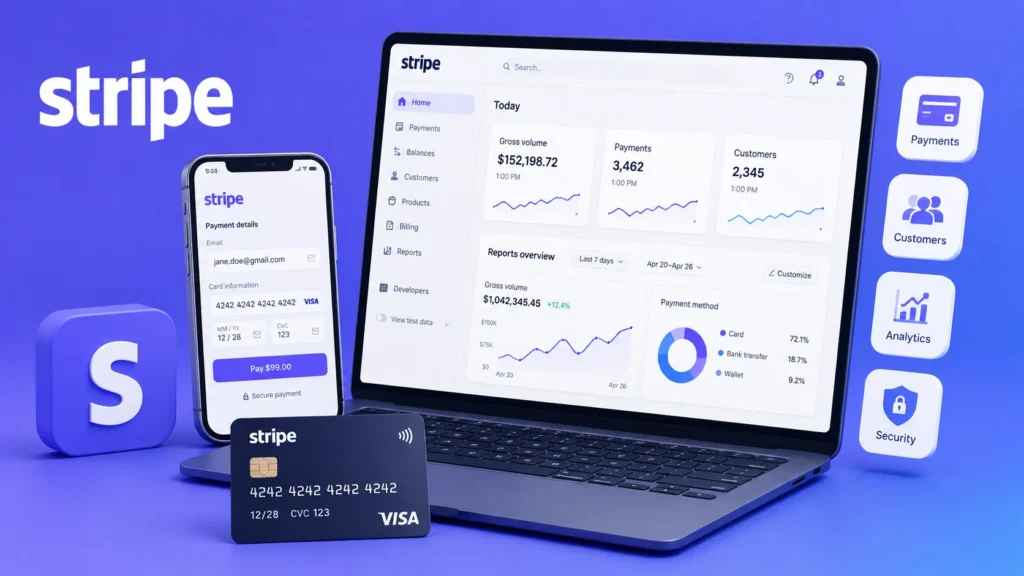
Its biggest advantage is flexibility.
Instead of forcing you into a single checkout experience, Stripe provides APIs and payment infrastructure that developers can build on. That makes it attractive for startups and businesses that want to customise their payment flows.
Why Choose Stripe?
- Developer-friendly APIs
- Custom payment experiences
- Flexible integrations
- Modular payment infrastructure
- More control over how payments are built into your product
For a technology company with developers who want control over the payment experience, Stripe can be much more flexible than a simpler payment solution.
The Trade-Off
There is an important distinction, though.
Stripe is a Payment Service Provider, not a Merchant of Record.
That means your company still has responsibility for areas such as tax, compliance, and chargebacks.
For a small company that simply wants payment processing, this may be perfectly manageable.
For a SaaS company selling worldwide, however, those responsibilities can become increasingly complicated.
Who Is Stripe Best For?
It is best for :
- Developer-led startups
- Technology companies
- Businesses needing customised payment flows
- Companies that want direct control over their payment infrastructure
3. Razorpay
For businesses whose primary market is India, Razorpay is a natural alternative to PayPal.
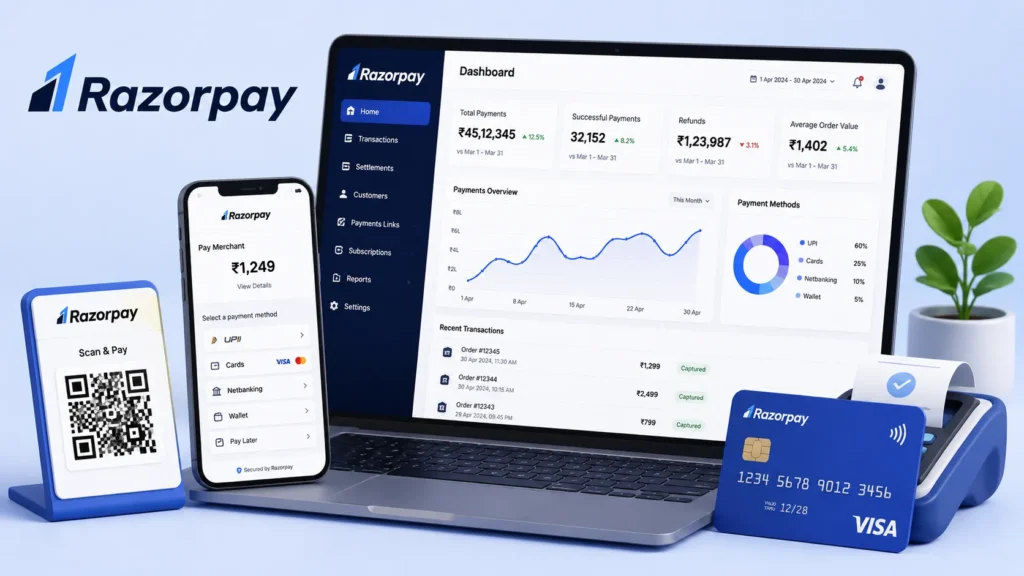
While PayPal is globally recognised, an India-first business may place more value on local payment infrastructure and familiarity with the domestic market.
That’s where Razorpay becomes particularly relevant.
Why Choose Razorpay?
- India-focused payment workflows
- Domestic payment options
- Familiarity with the Indian merchant environment
- Local payment rails
- A payment infrastructure designed around Indian businesses
For a company primarily selling within India, those local advantages can matter more than having a globally recognised payment brand.
The Trade-Off
The main limitation is that Razorpay isn’t necessarily a complete replacement for a global SaaS operating layer.
If your business is selling software internationally and needs extensive Merchant of Record support, you’ll need to look beyond basic payment processing.
Who Is Razorpay Best For?
Razorpay makes the most sense for:
- India-based businesses
- Domestic ecommerce companies
- Indian startups
- Businesses prioritising local payments
- Merchants whose primary customer base is in India
4. Payoneer
Payoneer is slightly different from the other platforms on this list.
Its strongest use case is often not running a complete SaaS billing operation. Instead, it is particularly useful for businesses and professionals that need to receive international payments and manage cross-border payouts.
That makes it popular among freelancers, agencies, marketplaces, and businesses working with international clients.
Why Choose Payoneer?
Payoneer can make sense when your primary concern is:
- Receiving international payments
- Cross-border transactions
- International receivables
- Managing payouts
- Working with clients or platforms in multiple countries
If you’re a freelancer or agency receiving money from overseas clients, your needs may be relatively straightforward.
You may not need a full subscription billing or Merchant of Record platform.
The Trade-Off
Payoneer isn’t designed to be a complete SaaS billing replacement.
So if you’re selling software subscriptions directly to customers around the world, another platform may be a better fit.
Who Is Payoneer Best For?
Payoneer is best for:
- A freelancer
- An international consultant
- An agency
- A marketplace participant
- A business focused on cross-border receivables and payouts
5. Paddle
Paddle is another major PayPal alternative worth considering if you run a SaaS business.
Like Dodo Payments, Paddle operates as a Merchant of Record, which makes it fundamentally different from a traditional payment processor.
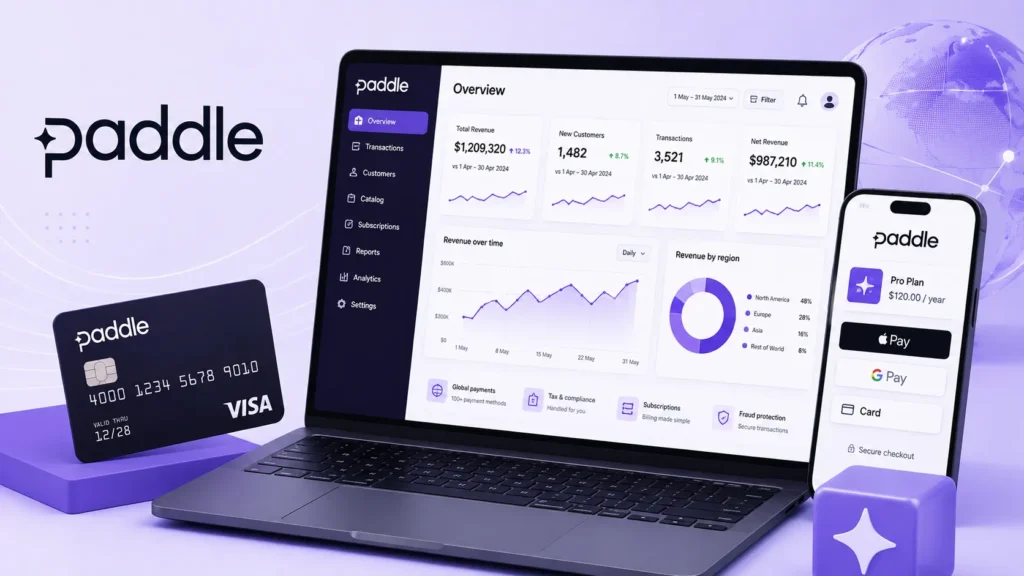
Instead of simply helping you collect payments, it can take on important responsibilities in global software sales.
Why Choose a Paddle?
Paddle is particularly attractive for businesses that want:
- SaaS billing
- Subscription management
- Merchant of Record services
- Tax handling
- Global software sales support
- A more bundled payment and compliance experience
For SaaS companies that don’t want to build an entire tax and billing operation internally, this can simplify the process considerably.
The Trade-Off
Paddle’s model is more opinionated than a flexible payment infrastructure platform.
That’s not necessarily a disadvantage. In fact, some businesses prefer having a platform handle more of the complexity.
But if you want maximum control over the payment infrastructure, a PSP such as Stripe may be more appropriate.
Who Is Paddle Best For?
Paddle is a strong option for:
- SaaS companies
- Subscription software businesses
- Digital product sellers
- Companies wanting Merchant of Record coverage
PayPal vs. PayPal Alternatives: What Should You Actually Compare?
It can be tempting to compare platforms based only on transaction fees.
That’s a mistake.
A platform with a slightly lower headline fee isn’t necessarily cheaper once you account for everything your team has to handle separately.
When comparing PayPal alternatives, look at the complete picture.
1. Transaction Fees
Start with the obvious question: how much will you pay for each transaction?
But don’t stop there.
Look at international charges, subscription fees, currency conversion costs, payout charges, and other potential expenses.
2. International Coverage
If you’re selling globally, check which countries and regions are supported.
A platform may look excellent on paper but become less useful if your target markets aren’t properly covered.
3. Local Payment Methods
Customers don’t all want to pay in the same way.
Credit cards may be common in one country, while bank transfers, wallets, or other local methods may dominate somewhere else.
Giving customers a familiar payment option can make the checkout experience much easier.
4. Subscription Billing
If you’re selling SaaS, subscriptions change everything.
You need to think about:
- Recurring payments
- Failed payments
- Billing cycles
- Customer upgrades and downgrades
- Renewals
- Refunds
- Chargebacks
A basic payment processor may not provide everything a subscription business needs.
5. Tax and Compliance
This is one of the most overlooked parts of global ecommerce.
Selling digital products internationally can introduce tax and compliance responsibilities across multiple markets.
If you’re handling all of that yourself, you need the appropriate systems and expertise.
A Merchant of Record can take much of that operational burden off your team.
6. Payouts and Settlement
Receiving money is only part of the story.
You also need to know when you’ll receive your funds, where they will be settled, what currencies are supported, and what fees may apply.
7. Developer Experience
If you’re building a custom product, your developers will care about the quality of APIs, documentation, integrations, and payment infrastructure.
A technically flexible platform can save your team significant time over the long term.
PayPal vs. Merchant of Record: What’s the Difference?
This is one of the most important distinctions to understand before choosing an alternative.
A traditional payment processor generally helps your business process payments.
A Merchant of Record can take on a broader set of responsibilities associated with selling to customers, including tax, compliance, fraud, and chargeback management.
Think about it this way:
Payment processor:
“I’ll help you process the customer’s payment.”
Merchant of Record:
“I’ll handle a larger part of the operational responsibility involved in selling to that customer.”
Neither model is automatically better.
If you only need straightforward payment processing, a PSP may be all you need.
If you’re selling SaaS or digital products internationally and want to reduce operational complexity, a Merchant of Record may be more attractive.
Conclusion
Choosing a PayPal alternative in 2026 is not only about finding another payment service. The right choice depends on your business, customers, and future plans. Payoneer can be a good option for freelancers who receive international payments, while Razorpay may work better for businesses focused on India. Companies with developer teams that want more control can consider Stripe, while SaaS businesses selling digital products worldwide may benefit from Merchant of Record platforms such as Dodo Payments and Paddle. A service with the lowest fees may not always be the cheapest overall, especially when you consider the time and effort needed to manage payments, taxes, compliance, and international transactions. In the end, the best PayPal alternative is the one that makes payments simple for your customers and easy for your business to manage.
FAQs
What is the best PayPal alternative in 2026?
What is the best PayPal alternative for small businesses?
What is the best PayPal alternative for Indian businesses?
What is a Merchant of Record?
Is Paddle a good alternative to PayPal for SaaS?
What is the best PayPal alternative for international payments?
Can I use a PayPal alternative for subscription payments?
Should I choose a payment processor or a Merchant of Record?
What is the best PayPal alternative for a SaaS business?
Recommended Stories for You

Devin Jacobs Aug 22, 2026

Devin Jacobs Aug 5, 2025

Money BetterThisWorld: Shaping Financial Choices for Social Impact and Sustainable Growth
Devin Jacobs May 15, 2026

Devin Jacobs Jul 11, 2026

Devin Jacobs Jul 4, 2026

Devin Jacobs Jun 8, 2026
Trending Stories

Pressvibepulse Com Review: Features, Safety, and User Experience

20 Best Books for Small Business Owners in 2026 to Grow and Succeed

PepsiCo-Owned Brands: Complete List of Companies and Products

Ramtin Abdo: Deep Dive into His Business Success and Private Life

Billy Carson Net Worth and Biography

Bfanni8986: Understanding the Story Behind a Unique Online Identity and Comparison with Other Platforms
How a Collaborative CRM System Improves Communication and Efficiency?

Abraham Quiros Villalba: Inspiring Journey of a Forward-Thinking Visionary Innovator

