
How Digital Media Is Changing the Way We Learn Outside the Classroom
Jun 6, 2026 | By Startuprise
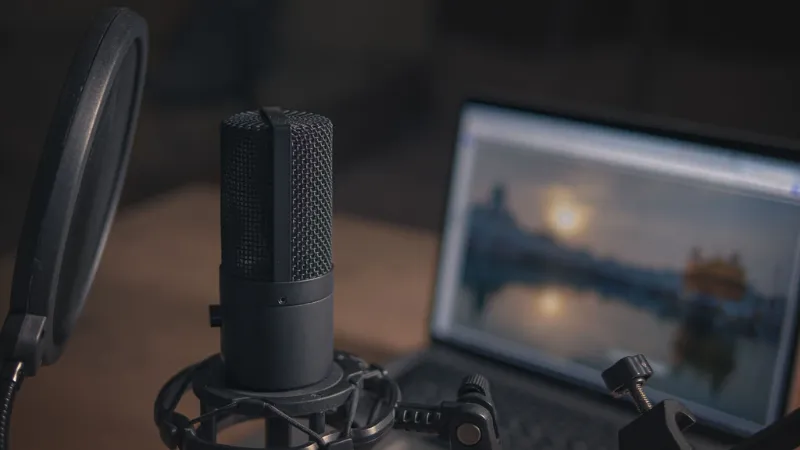
A few months ago, I found myself reading about the history of public parks at nearly midnight.
 Follow us
 Follow us
The strange part wasn't the topic. The strange part was how I got there.
I had started with a short video about city life, clicked on an interview with an architect, followed a recommendation to an article about urban planning, and somehow ended up reading about why many of the parks we enjoy today were originally designed more than a century ago.
None of this was planned. Nobody assigned it. There was no test waiting for me at the end.
RECOMMENDED FOR YOU

From Garage to HQ: How to Brand Your Startup’s Physical Space on a Budget
Startuprise
Apr 30, 2026
How to Compare Pickleball Paddles: What Players Should Look for Before Buying
Startuprise
Aug 13, 2026
Yet I learned something.
That's becoming a surprisingly common experience. More and more, learning happens outside the places traditionally associated with education. Not because schools and universities matter less—they don't—but because digital media has quietly filled the gaps between formal learning and everyday life.
Learning Doesn't Always Look Like Learning
Most of us still picture learning in fairly traditional terms. A classroom. A lecturer. A textbook with far too many highlighted sections.
Real life is messier.
Sometimes learning starts with a question. Sometimes it starts with boredom. Sometimes it starts because you saw a headline and thought, "That can't possibly be true."
A university student researching a topic for an assignment might begin with academic sources but quickly find themselves moving between podcasts, interviews, articles, and discussion forums. During larger research projects, some students also compare external resources, seek expert perspectives, or look for help with capstone project requirements while trying to understand how complex research is structured and presented. Somewhere in that process, they often end up learning far more than the assignment itself originally required. A question that seemed fairly straightforward at the beginning can open the door to entirely new areas of interest.
The process rarely follows a neat path.
In fact, one of the defining features of learning through digital media is that it often feels slightly accidental.
You don't sit down and announce, "Now I shall acquire knowledge."
You just keep following your curiosity.
We Learn in Fragments Now
I sometimes wonder whether the biggest change isn't access to information but the way information arrives.
A generation ago, learning often required setting aside dedicated time. Today, knowledge tends to appear in smaller pieces.
A ten-minute podcast while walking the dog.
A documentary watched on a Sunday afternoon.
An article opened during a coffee break.
A conversation under a social media post that unexpectedly turns thoughtful.
Individually, these moments can seem insignificant. Together, they add up.
The result isn't always deep expertise, of course. Watching three videos about economics doesn't make anyone an economist. But it does create familiarity. It builds context. And often that's enough to spark a deeper interest later on.
The Best Explanations Are Often the Simplest
One thing digital media does particularly well is translate complex ideas into everyday language.
Not every expert is a great teacher. We've all encountered people who clearly know their subject but somehow make it harder to understand.
At the same time, there are journalists, creators, researchers, and communicators online who have an unusual gift for making difficult concepts feel approachable.
They tell stories.
They use examples.
They connect abstract ideas to things people already understand.
And because of that, subjects that once felt intimidating become accessible.
I've seen people become interested in history through YouTube channels, learn basic investing from podcasts, or develop an appreciation for science through documentaries they watched purely for entertainment.
Nobody forced them to learn. That's part of what makes it effective.
Social Media Is More Complicated Than We Admit
Social media tends to appear in conversations as either a villain or a miracle.
The reality is probably less dramatic.
Yes, it can be distracting. Most people know exactly how easy it is to lose twenty minutes—or an hour—without meaning to.
But it's also where many people encounter ideas they wouldn't otherwise come across.
A marine biologist explaining coral reefs.
A historian correcting a popular myth.
A doctor discussing public health.
An engineer breaking down how a bridge is built.
The challenge isn't finding information anymore. The challenge is deciding which information deserves attention.
That's a very different problem from the one previous generations faced.
Knowing More Isn't the Same as Understanding More
This might be the most important point.
Access to information has expanded dramatically. Understanding hasn't necessarily kept pace.
There's a difference.
Reading five articles doesn't automatically mean you've grasped a topic. Watching a few videos can create the illusion of expertise surprisingly quickly.
Digital media has made critical thinking more valuable, not less.
The ability to question sources, compare perspectives, and admit uncertainty matters now in ways that feel increasingly obvious.
Sometimes genuine learning involves discovering how much you still don't know.
And honestly, that's not a bad thing.
The Classroom Hasn't Disappeared—It's Expanded
People occasionally talk as though digital media is replacing traditional education.
That doesn't seem quite right.
Universities still matter. Schools still matter. Structured learning still matters.
What has changed is everything around them.
The hours between lectures. The evenings after work. The random moments when curiosity appears without warning.
Those spaces used to be relatively disconnected from education. Now they're full of opportunities to learn something new.
Maybe that's why the distinction between "learning" and "just spending time online" has become harder to define.
You start watching a video because you're curious.
You read an article because a friend shared it.
You listen to a podcast because the guest sounds interesting.
And somewhere along the way, without really noticing, you've learned something.
Not in a classroom. Not for a grade.
Just because the information was there and your curiosity decided to follow it.
Recommended Stories for You

Startuprise Nov 13, 2025

Startuprise Jun 15, 2026
Startuprise Nov 14, 2025
Startuprise Jun 24, 2026
Startuprise Aug 21, 2025

Startuprise Jun 24, 2026
Trending Stories

From SaaS to Smart SaaS: How AI Integration Is Reshaping Modern Products
Startup Founders Managing Focus and Consistency Challenges
Lifestyle Changes to Consider After an Injury

The Importance of Maintaining Your Commercial Building’s Roof
How To Scale Your Startup And Protect Your Bottom Line

The Future Of Operational Resilience In High-Growth Sectors

How Colorado’s Startup Boom Is Reshaping Commercial Spaces

How to Overcome Fear and Start Investing Today

