


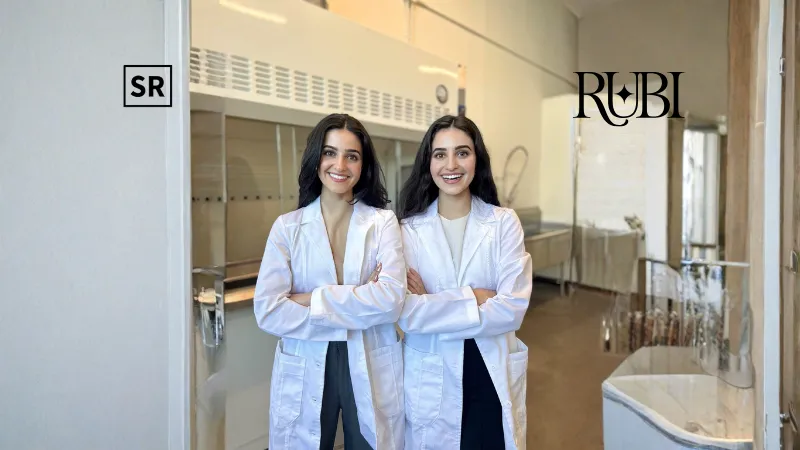
Rubi, a San Francisco, CA-based company leveraging technologies that turn carbon into essential materials, has raised $7.5 million in a funding round led by AP Ventures and FH One Investments.
The round also saw participation from Talis Capital, CMPC Ventures, H&M Group, Understorey Ventures, and angel investors.
Read More:Tenkara Raises $7M in Funding
The company plans to use the funds to scale its production system for industrial use, speed up the launch of new products, and improve its engineered enzymes to boost performance and lower costs.
Rubi, a company developing technology to turn carbon into essential materials, is leading a new approach to manufacturing. The funding follows a year of strong commercial progress for Rubi. In 2025, the company.
- Signed multi-year agreements worth over $60M with leading fashion brands, and manufacturers
- More than doubled partnerships from 7 to 15, including Walmart, and Reformation
- Successfully tested fibre performance with multiple partners
- Started new pilot projects in CPG and aerospace, expanding beyond textiles
Rubi’s modular manufacturing system addresses key industry challenges, including supply chain resilience, flexible production and lower capital costs. Unlike traditional manufacturing, which requires large, fixed infrastructure, Rubi’s platform requires up to 10x less capital. It can be set up in modular units anywhere, enabling supply chains to be built closer to where they’re needed at a much lower cost.
Rubi’s breakthrough stems from its proprietary cell-free enzyme platform, which converts carbon sources, such as CO₂, into materials like cellulose using specialized enzymes. This method is more efficient and flexible than traditional processes, with better control over material performance. AI and machine learning further improve enzyme design, helping reduce costs and increase productivity.
Rubi’s progress goes beyond partnerships. In 2025, the company was named to the Norrsken Impact/100 list, and its Co-Founder and CEO, Neeka Mashouf, was recognized on the MIT 35 Under 35 list and spoke at the World Economic Forum in Davos. Rubi also added six top experts in biocatalysis, AI enzyme engineering, and scaling cell-free systems to its scientific advisory board, including Dr Michael Jewett, Dr Richard Fox, and Dr Alex Patist.
“We started Rubi with the idea that cell-free enzyme systems could turn CO₂ into essential materials in a more efficient and scalable way,” said Neeka Mashouf, Co-Founder and CEO of Rubi. “We’ve now shown the technology can scale and meet customer standards, marking a key step toward commercialization. This funding will help us grow faster and meet global demand for affordable, modular manufacturing across industries like textiles, CPG, aerospace, and chemicals.”
“Rubi has reached a key milestone, with its technology proven at pilot scale and growing demand across multiple markets,” said Kevin Eggers, Partner at AP Ventures. “The team has made strong progress turning its science into real commercial traction. We’re excited to support Rubi as it moves into industrial-scale production and continues to grow.”
Looking ahead, Rubi plans to scale up to an industrial system capable of producing commercial volumes of materials for customers in the textile and CPG sectors.
About Rubi
Founded in 2021, by Neeka Mashouf and Dr Leila Mashouf, Rubi is building a new kind of manufacturing that turns waste carbon into essential materials. Its enzyme based platform converts CO₂ into important chemicals, and materials, enabling flexible, local production. Rubi aims to create a system that supports both environmental sustainability and industrial growth.
Read More:Turquoise Health Raises $40M in Series C Funding

