


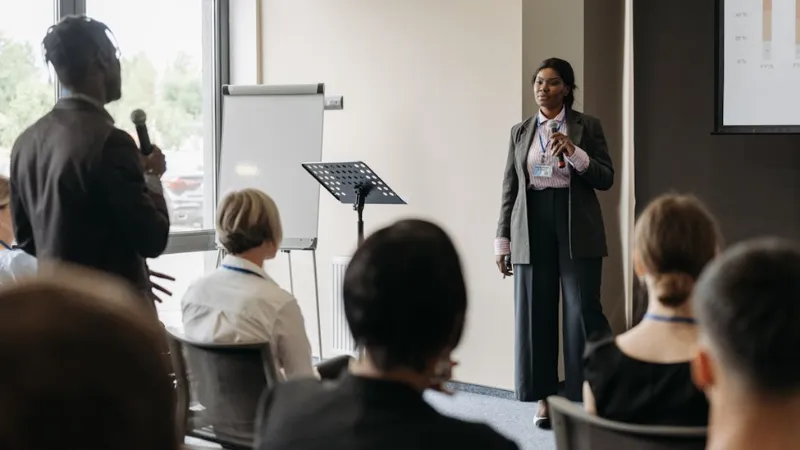
Have you ever logged off a long Zoom call and felt like something was missing? In a world where we can stream keynotes in pajamas and network through direct messages, it is fair to ask whether industry conferences still matter. At first glance, they seem expensive, crowded, and old-fashioned. Yet every year, people still pack convention centers from Las Vegas to Austin. There is a reason for that, and it goes deeper than free tote bags and coffee.
In the digital age, where connection is constant but often shallow, gathering in person has taken on new meaning. The value is not just in the sessions, but in what happens between them.
The Human Need for Face Time
Digital tools make communication easy, but they rarely make it memorable. When you meet someone in person, you read their body language, hear their tone, and share a physical space. That experience builds trust faster than a dozen emails ever could. Neuroscience backs this up, showing that face-to-face contact activates parts of the brain linked to empathy and understanding.
After years of remote work during and after the pandemic, many professionals realized that convenience comes at a cost. Teams became efficient but often disconnected. Conferences offer a reset button. They bring back the informal chats over coffee and the spontaneous introductions that lead to partnerships. In a world where we text more than we talk, simply being in the same room feels almost radical.
A Curated Shortcut Through Information Overload
We live in an era where information is endless and attention is limited. Every day brings new webinars, newsletters, podcasts, and social posts. Trying to keep up can feel like drinking from a fire hose. Conferences act as a filter. The best events gather top thinkers and present ideas in a structured, focused way.
For example, marketing professionals often look up SEO events to attend because they know that a well-planned conference can save months of trial and error. Instead of scrolling through conflicting advice online, they can hear directly from experts who have tested strategies in real markets. That concentrated learning environment makes it easier to spot trends and separate hype from substance.
Networking That Actually Works
Online networking platforms promise global reach, yet many connections stay surface level. You connect, exchange a few messages, and move on. At a conference, the dynamics are different. You might sit next to someone at a workshop, share notes, then continue the conversation over lunch. That shared experience builds a stronger bond.
Consider how many startups trace their origin stories to chance meetings at tech gatherings. A developer meets a product manager, and an idea turns into a pitch deck. Investors often attend conferences precisely because they want to read the room, not just the spreadsheet. Being present allows people to sense enthusiasm, confidence, and chemistry in ways that video calls rarely capture.
Real-Time Feedback in a Rapidly Changing World
Industries are shifting faster than ever. Artificial intelligence is reshaping jobs, climate concerns are altering supply chains, and economic uncertainty keeps leaders on edge. In such an environment, real-time feedback becomes priceless. Conferences create a live forum where questions can be asked and answered on the spot.
When a speaker presents a new strategy, the audience can challenge assumptions immediately. Panel discussions allow for debate rather than polished sound bites. This back-and-forth helps refine ideas in a way that static online content cannot. In times of rapid change, that collective thinking process can help companies adapt more quickly and wisely.
A Window Into Broader Social Trends
Conferences are not just about business tactics; they are cultural snapshots. The themes chosen, the speakers invited, and the questions asked from the audience all reflect larger societal shifts. In recent years, topics like diversity in leadership, mental health at work, and sustainable business practices have moved from side sessions to main stages.
This mirrors broader conversations happening across society. Younger professionals expect companies to take stands on social issues, and conference agendas often reflect those expectations. Walking through an expo hall, you can see which technologies are gaining traction and which buzzwords are fading. It is like watching the future take shape in real time.
The Economic Engine Behind Innovation
Beyond personal growth, conferences drive economic activity. Cities compete to host major events because they bring in tourism dollars and global attention. Events like South by Southwest in Austin or CES in Las Vegas do more than fill hotel rooms. They attract startups, media coverage, and venture capital.
These gatherings often serve as launchpads for new products. Companies time announcements to coincide with major conferences because they know the right audience will be present. Journalists cover trends emerging from keynote stages, shaping public perception. In this way, conferences become part of the machinery that pushes industries forward.
Balancing Digital and Physical Worlds
None of this means digital tools are obsolete. Hybrid models have become common, allowing people who cannot travel to still participate. Livestreamed sessions and on-demand recordings extend the life of conference content. The digital layer makes events more inclusive and accessible.
However, the core value still lies in shared physical experience. After years of virtual everything, people crave environments where conversations are not mediated by screens. The irony is that the more digital our lives become, the more meaningful in-person moments feel. Conferences offer a rare blend of structured learning and organic connection that technology alone cannot replicate.
As industries navigate artificial intelligence, economic shifts, and evolving social expectations, the need for spaces that encourage honest dialogue and creative thinking only grows. Conferences may evolve in format, become more sustainable, or integrate more technology, but their purpose remains steady. They gather people who care about the same problems and give them room to wrestle with solutions together.
In the end, industry conferences still matter because they satisfy something deeply human. We want to belong to communities, to test our ideas in public, and to feel the energy of a room full of people who share our interests. In a digital age defined by speed and scale, conferences remind us that progress often begins with a conversation across a table, not a comment in a thread.

