

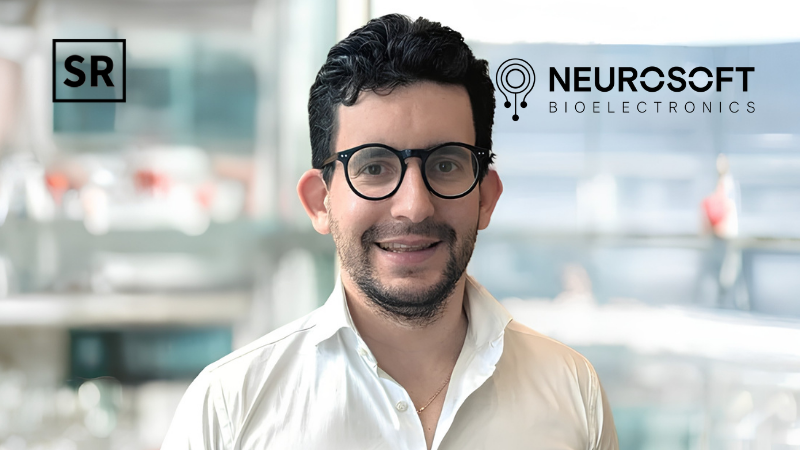
Neurosoft Bioelectronics, a Geneva, Switzerland- and NYC-based neurotechnology company developing soft brain-computer interfaces (BCIs), has raised $7.5 million in a Seed funding round led by Skybound Venture Capital.
 Follow us
 Follow us
The round also saw participation from PL Capital, IAG Capital Partners, and Connecticut Innovations, among others. The raise brought the total funding to over $20 million.
The company plans to use the funds to develop further its minimally invasive brain interface platform, which has already been tested in 10 patients, and to accelerate work on a cortical foundation model for new brain-computer interfaces (BCIs).
Beyond its near-term clinical goals, Neurosoft is developing a scalable neural data platform. It uses data from its minimally invasive brain interfaces to build a foundation model of the human cortex. Like large language models trained on large amounts of text, this system will be trained on extensive, high-quality brain activity data collected from its implantable devices.
RECOMMENDED FOR YOU

[Funding alert] CA-based Anvilogic Secures $45Million in Series C Round Funding
Devin Jacobs
Apr 19, 2024


Andrew Jebasingh Co-Founded SiteVue AI Scores $7.5M in Seed Funding
Devin Jacobs
Aug 8, 2026
In the short term, this model aims to improve the performance of invasive brain-computer interfaces for patients with severe neurological conditions. In the long term, it could also support non-invasive BCIs and help make brain interfaces a common way for humans and machines to communicate.
Neurosoft’s platform allows access to the full cortex without directly penetrating brain tissue. It uses its own soft, stretchable electrodes that are up to 1,000 times more flexible than those in other neural interfaces, can cover up to 30 times more of the cortex than current leading BCIs, and can be implanted through a minimally invasive procedure.
Neurosoft has tested its brain interface in 10 patients through two ongoing clinical trials at UTHealth Houston and UMC Utrecht, including a first-of-its-kind 64-channel soft, stretchable brain interface study used to guide epilepsy surgery. It has more than 25 patents backing its technology and has been published in over 25 peer-reviewed research papers.
The company has also set up a GMP manufacturing facility in Switzerland, earned ISO 13485 certification, and received FDA feedback through several pre-submission meetings, which have helped shape the regulatory path for its first commercial product.
Read More:Rasa Legal Receives $1M Investment from NextLadder Ventures
“Neurosoft isn't just building a medical device; they are building the definitive interface between the human mind and the digital world. Their stretchable, sub-millimeter electrodes are a feat of engineering that finally allows us to interface seamlessly with the brain without damaging it. We are proud to lead this investment to accelerate their mission of treating devastating conditions like severe tinnitus and epilepsy, while simultaneously gathering the unprecedented neural data required to map and decode the human cortex at scale,” said George Varvarelis, GP at Skybound Venture Capital.
“Our soft electrode platform, paired with a streamlined regulatory pathway, gives us access to neural data at a quality and scale no other approach can safely match today,” said Nicolas Vachicouras, PhD, CEO and Co-Founder of Neurosoft Bioelectronics. “That data is the foundation for improved clinical outcomes, and a cortical foundation model that will help shape the next generation of brain interfaces. The investor support we’ve seen in this round validates that we’re on the right path.”
About Neurosoft Bioelectronics
Founded in 2020 by Nicolas Vachicouras, Ludovic Serex, Florian Fallegger, and Prof. Stéphanie Lacour, Neurosoft Bioelectronics is a neurotechnology company based in Geneva, Switzerland, with a US subsidiary in New York. Founded at EPFL, it develops stretchable, scalable brain-computer interfaces. Its proprietary soft, stretchable electrode platform can access the full cortex without penetrating brain tissue and enables high-quality neural data collection.
Recommended Stories for You

Startuprise Oct 22, 2025

Devin Jacobs Apr 4, 2026

Devin Jacobs Nov 29, 2023
Devin Jacobs May 13, 2026
Devin Jacobs Sep 10, 2026

Trending Stories

California-Based Candid Health Raises $120M in Series D Funding
Health Care Startup Aurenar Scores $5.7M in Seed Funding

Sameer Gulati Co-Founded Ordway Scores $20M in Funding

California-Based Renata Medical Raises $25M in Series D Funding

Texas-Based Light Raises $46M in Series A Funding

Mettler Toledo appoints Natalia Shuman to its Board of Directors

AI Startup Etched Raises $700M in Funding Round

AI Startup Luminary Raises $22M in Series A Funding

