

Reactor Raises Funding to Scale Real-Time Generative Video Platform
Oct 6, 2026 | By Devin Jacobs
SUMMARY
- Reactor raised undisclosed Series A funding.
- Funds will support its AI platform and expansion.
- Reactor builds tools for generative video and world models.
 Follow us
 Follow us
Reactor, a San Francisco, CA-based developer platform for real-time generative video and world models, has raised an undisclosed amount in funding.
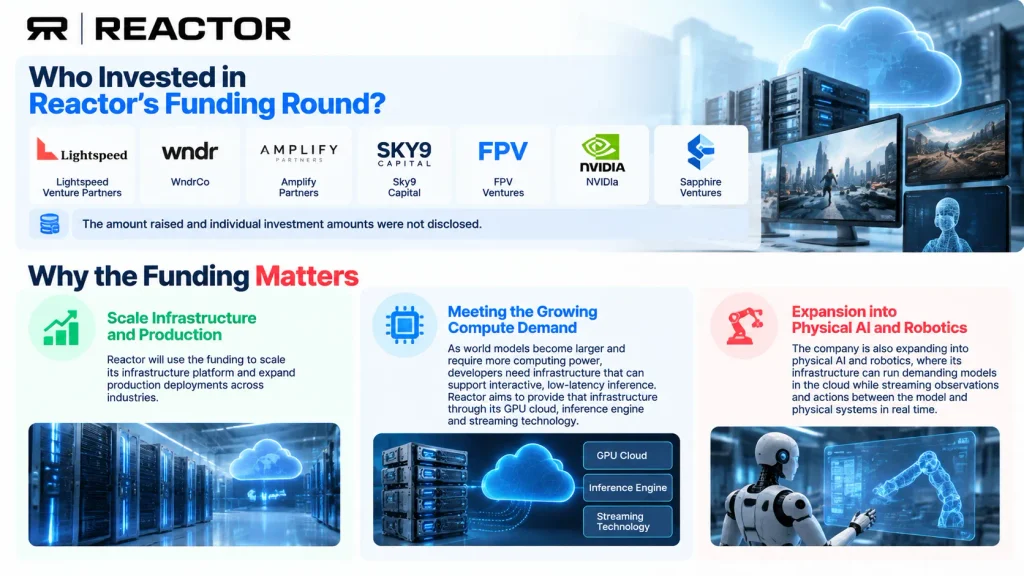
The round was led by Lightspeed Venture Partners, WndrCo, Amplify Partners, Sky9 Capital, FPV Ventures, NVIDIA, and Sapphire Ventures.
The company plans to use the funding to scale its infrastructure platform and production deployments across industries.
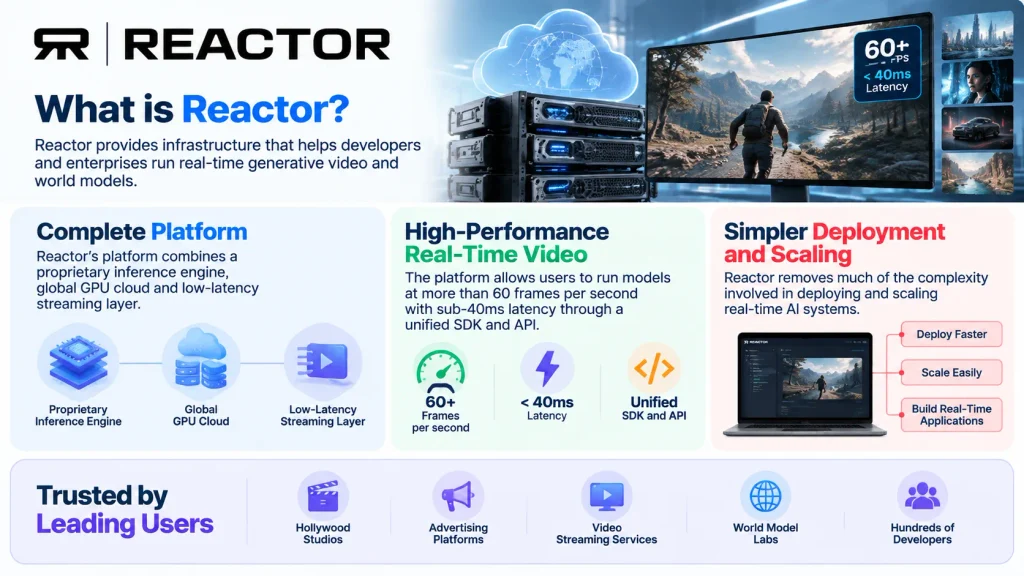
What is Reactor?
Reactor provides infrastructure that helps developers and enterprises run real-time generative video and world models. Its platform combines a proprietary inference engine, global GPU cloud and low-latency streaming layer.
Read More:California-Based Clockwork.io Secures $31M in Funding
The platform allows users to run models at more than 60 frames per second with sub-40ms latency through a unified SDK and API. This removes much of the complexity involved in deploying and scaling real-time AI systems.
Reactor is used by companies across media and entertainment, including Hollywood studios, advertising platforms and video streaming services. World model labs and hundreds of developers also use its infrastructure to build real-time applications.
Who Invested in Reactor’s Funding Round?
The funding round was led by:
- Lightspeed Venture Partners
- WndrCo
- Amplify Partners
- Sky9 Capital
- FPV Ventures
- NVIDIA
- Sapphire Ventures
The amount raised and individual investment amounts were not disclosed.
Why the Funding Matters
Reactor will use the funding to scale its infrastructure platform and expand production deployments across industries.
As world models become larger and require more computing power, developers need infrastructure that can support interactive, low-latency inference. Reactor aims to provide that infrastructure through its GPU cloud, inference engine and streaming technology.
The company is also expanding into physical AI and robotics, where its infrastructure can run demanding models in the cloud while streaming observations and actions between the model and physical systems in real time.
Who founded Reactor?
Reactor was founded by Alberto Taiuti and Bryce Schmidtchen and is headquartered in San Francisco, California.
The company focuses on building infrastructure for real-time generative video and world models.
"Every time computing has shifted from passive to interactive, entirely new applications have become possible," said Alberto Taiuti, co-founder and CEO of Reactor. "That's what's happening with world models now. Whether you're building a new media experience or training an autonomous system, the underlying challenge is the same: these models require enormous amounts of compute, and they need to respond in real time.
"Every enterprise team building interactive video, gaming or robotics applications eventually runs into the same wall – the infrastructure required to serve these systems in real time," said Anders Ranum, Partner at Sapphire Ventures.
Market and Business Growth
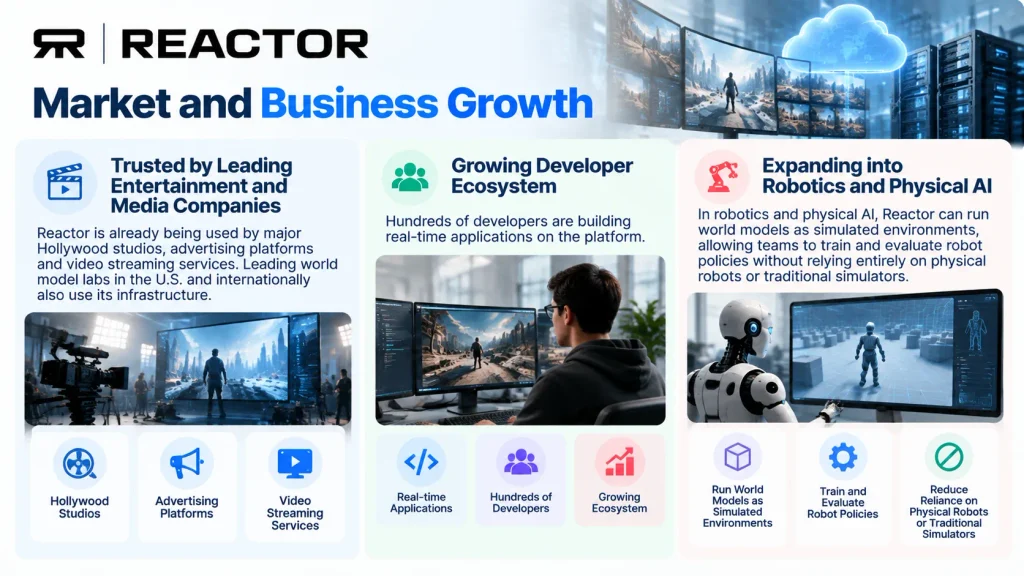
Reactor is already being used by major Hollywood studios, advertising platforms and video streaming services. Leading world model labs in the U.S. and internationally also use its infrastructure.
Hundreds of developers are building real-time applications on the platform.
In robotics and physical AI, Reactor can run world models as simulated environments, allowing teams to train and evaluate robot policies without relying entirely on physical robots or traditional simulators.
RECOMMENDED FOR YOU

[Funding alert] TX-based Closinglock Secures $12Million in Series A Round Funding
Devin Jacobs
Feb 9, 2024

What Happens Next?
Reactor plans to scale its infrastructure platform and increase production deployments across industries.
The company will continue expanding its role in real-time generative video, world models, robotics, and physical AI, providing developers with infrastructure to serve, evaluate, and train these systems without building their own low-latency inference platforms.
Read More:Texas-Based UpSmith Raises $10M in Series A Funding
Recommended Stories for You
Team SR Nov 5, 2024

Devin Jacobs Dec 8, 2023
Devin Jacobs Apr 29, 2026

Startuprise Apr 16, 2025
Startuprise Sep 23, 2025

Devin Jacobs Jul 13, 2026
Trending Stories

Bernat Olle Co-Founded Vedanta Biosciences Scores $60M in Funding
Learning Platform Codio Raises $5M in Funding

Washington-Based Levanta Raises $22M in Series B Funding

Texas-Based BNSF Logistics Appoints Tim Humbert as Chief Commercial Officer

Olay taps Kelly Rowland as New Brand Ambassador
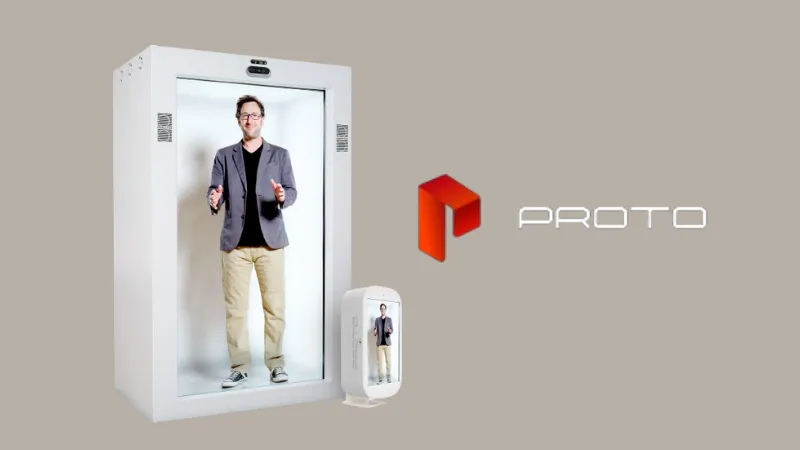
[Funding alert] CA-based Proto Hologram Secures an Investment from Cartan Capital
Physical AI Company Reframe Systems Raises $40M in Additional Funding
AI Startup Veridion Raises $20M in Series A Funding Round

