

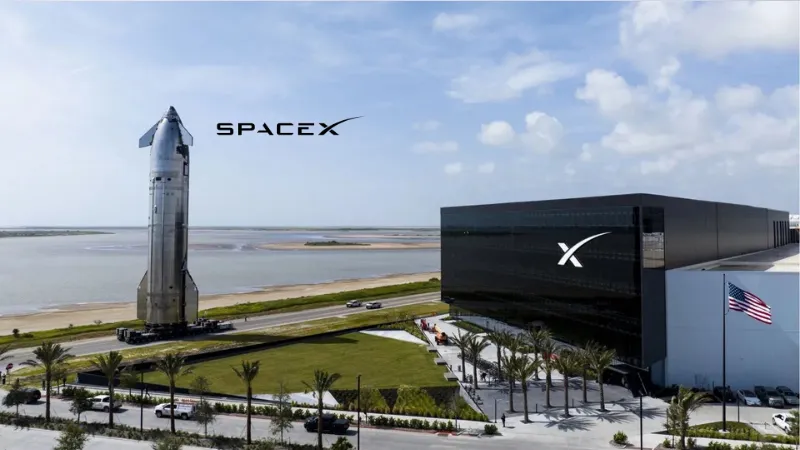
SpaceX plans to launch its Starship rocket early Monday, with the goal of reaching orbit for the first time. The 75-minute launch window will open at 8:15 a.m. EDT from Starbase, Texas.
SUMMARY
- SpaceX plans to launch Starship’s 14th test flight on September 28.
- The mission will deploy 26 Starlink V3 satellites.
- Starship is a reusable rocket built for future space missions.
 Follow us
 Follow us
The Federal Aviation Administration approved SpaceX’s launch and reentry operations on September 26. During the 14th test flight, SpaceX also plans to deploy 26 of its latest Starlink V3 satellites.
Starship is an important part of SpaceX’s plans to expand its Starlink business. The company currently has around 11,000 active satellites in orbit.
SpaceX designed Starship to be fully reusable and carry more cargo at a lower cost than previous spacecraft. The company is also preparing the rocket for a NASA test flight next year.
RECOMMENDED FOR YOU

Illinois-Based SAI360 Appoints Prashant Darisi as Chief Product Officer
Devin Jacobs
Sep 28, 2026


Read More:International Finance Corporation invests $20M in Fintech Startup Boost
On SpaceX’s earnings call in August, Musk said, “It’s not out of the question that at some point, Starlink will deliver a majority of the world’s internet, at least in countries where we’re allowed to operate, which is the vast majority of countries.”
SpaceX has designed the Starship Super Heavy rocket and booster to be fully reusable and carry more cargo into orbit at a lower cost than earlier spacecraft. None of the previous 13 test flights were planned to reach orbit, but the company hopes the 14th flight will complete an orbit around Earth.
SpaceX is preparing Starship for a major NASA test flight next year and plans to use the rocket to help return U.S. astronauts to the Moon.
SpaceX COO Gwynne Shotwell said the company also plans to use Starship to launch AI computing satellites into orbit in 2027.
The company’s new V3 satellites are made at its SpaceX facility in Redmond, Washington. They have solar panels that generate twice as much power as earlier versions. The satellites are also larger and designed to provide stronger transmission.
Read More:California-Based Speclips Secures $11M in Pre-IPO Funding
Recommended Stories for You

Devin Jacobs Mar 24, 2026

Devin Jacobs May 23, 2026
Devin Jacobs Apr 6, 2024

Devin Jacobs Jul 31, 2026

Devin Jacobs Aug 25, 2026

Startuprise Nov 7, 2025
Trending Stories

Catena Labs Raises $18M to Build the World’s First AI-Native Financial Institution

Solar-Based Gritt Raises $26M in Series A Funding Round

George Pla Co-Founded Cordoba Secure Investment From VSS Capital Partners

Fintech Startup Piston Raises $15M in Series A Funding

Healthtech Startup RapidPulse Scores $48M in Series B Funding

SaaS Startup Passionfroot Bags $15M in Series A Funding Round

AI Startup Cast Insights Bags $4.5M in Pre-Seed Funding

Fisent Technologies raises $4.3Mn to help enterprises automate AI use

