

HappyRobot’s Journey: How AI Agents Are Revolutionising Global Freight
Sep 15, 2025 | By Devin Jacobs

The New Frontier of AI in Logistics
The logistics industry is the invisible glue of global trade, but it has been stuck in the past for decades. Freight operators, the unnoticed workers of supply chains, have toiled for years in the ceaseless churn of back-and-forth emails, rate negotiations and scheduling pandemonium.
 Follow us
 Follow us
Billions are spent on software in the industry, and yet it remains a world of manual communication and legacy systems. That’s where HappyRobot, a San Francisco AI startup, comes in. With a fresh Series B funding of $44 million and developing partnerships with international names like DHL, Ryder, and Flexport, HappyRobot is revolutionizing the way the world transports goods.
Read Also: Can Cancer Be Beaten Without Breaking Lives? Pallando Therapeutics Thinks So
The Genesis: Why Freight Needed a Robot
Freight logistics is complex. One shipment can also involve multiple carriers, brokers, and customs agents scattered around continents, all using emails, spreadsheets and middle-of-the-night calls. This manual process slows things down, adds cost and leaves room for error.
RECOMMENDED FOR YOU



The HappyRobot team looked at this bottleneck as something more than a societal inconvenience: they saw it as a trillion-dollar business opportunity. If AI can negotiate ad deals, write code and help doctors, why can't it also handle freight conversations? That's what gave life to HappyRobot: the idea of creating a tool that could automate the most painful, repetitive forms of communication in logistics.
The Founders and Vision
HappyRobot was created by three entrepreneurs, Pablo Palafox, Luis Paarup, and Javier Palafox, with an extensive background in the AI, automation and logistics space. They saw that today's tools left operators juggling endless emails, calls and spreadsheets, sowing chaos and inefficiency throughout supply chains.
Their vision was simple, but radical: Don't substitute people with digitized worker bees; augment them with A.I.-powered digital co-workers, which can perform mundane, time-consuming job tasks and free knowledge workers to concentrate on strategic decisions. And it's this vision of human-AI partnership which has been fuelling HappyRobot's adoption and expansion.
The Breakthrough: AI Agents for Freight Operators
HappyRobot’s foundation is a suite of robust AI agents, but trained with a language that is uniquely designed to "talk freight." They also negotiate rates with airlines, reserve seats, cancel flights, and organize pickups — all in the process of making conversation over email or chat. Freight operators have no need to learn a new system; they need AI to remember to replace their repetitive communication with customers – the difference is orders of magnitude are faster, better, and more accurate.
The benefit of HappyRobot is that it would fit right into your current workflow. Its job isn't to make operators ditch their machine; it's a quiet colleague behind the scenes, to raise them above the noise. That's why Fortune 500 leaders like DHL, Ryder, and Flexport have already joined the platform, driving revenue to Happy Robot tenfold by late 2024.
The Big Raise: $44 Million Series B
HappyRobot, the company behind Minari, in September 2025, announced a $44 million Series B round, led by Bain Capital Ventures, as well as Index Ventures and others. This round gives the company a value of nearly $500 million, a startup growth level for a startup that is not yet five years old.
The company will use the funds to increase the size of the team, speed up product development and enter new markets.
For investors, the bet is simple: logistics is one of the final pieces of the economy that remains undigitized, mainly, and HappyRobot's mixture of AI automation and human teamwork uniquely positions it at the vanguard of the digitization revolution.
Like all disruptive startups, HappyRobot faces its own set of challenges to surmount. The largest is trust — freight hauliers are wary of entrusting crucial communication to their AI. You have to know how to speak their language, which can only be done if you are open and reliable to them consistently.
Scaling up globally can become even more complex due to the significant variations in shipping regulations and rules from nation to nation. That opportunity is getting crowded, with old Gustaruppers and nascent AI startups all racing to capture it. However, thanks to its excellent customer base, fast-growing revenue, and focus on customer success, HappyRobot looks well placed to overcome these hurdles.
Impact: What HappyRobot Means for Global Supply Chains
The effect of HappyRobot is not just that it's more efficient. By eliminating communication bottlenecks, it enables freight operators to close deals more quickly, avoid delays, and keep costs low. This creates more resilient supply chains; a crucial consideration in a post-pandemic world in which distribution disruptions are the new normal. The HappyRobot model also underscores a larger trend in AI adoption: AI itself is becoming a front-line worker rather than a back-office tool, collaborating with humans in the very core functions of the business.
From Freight to Insight: Lessons Worth Carrying
To start with, a few lessons the startup world can gather from HappyRobot's journey. First, the most exciting opportunities tend to be in industries that appear to be the most "boring" from the outside. Freight may not be the sexiest-sounding industry, but its inefficiencies opened a billion-dollar opportunity.
Second, addressing a narrow pain point; in this case, communication overload can unlock tremendous value. Third, the author argues that building user trust is as essential as building innovative technology. By framing AI as a peer, rather than a replacement, HappyRobot guaranteed acceptance and not pushback.
The Future of AI Co-Workers
The rise of HappyRobot is a preview of the future of work — a future in which humans and machines work hand in hand, as is already happening in the Indian healthcare sector. For logistics, this might translate into more efficient and less expensive supply chains. For the startup world, it's a reminder that tech meets empathy can upend even the most entrenched of industries. And as HappyRobot pedals up with its $44 million jolt, one thing is clear: The future of freight is no longer only human.
Recommended Stories for You

Devin Jacobs Sep 4, 2026

Devin Jacobs Mar 30, 2026

Devin Jacobs Mar 19, 2026

Devin Jacobs Apr 2, 2026

Devin Jacobs Jun 6, 2026

Devin Jacobs Apr 18, 2026
Trending Stories

Rime Lands $24M in funding led by M13 to Expand Enterprise Voice AI Platform

Massachusetts-Based Remedium Bio Scores $10M in Initial Series A Funding

California-Based Twin1 AI Raises $20M in Seed Funding
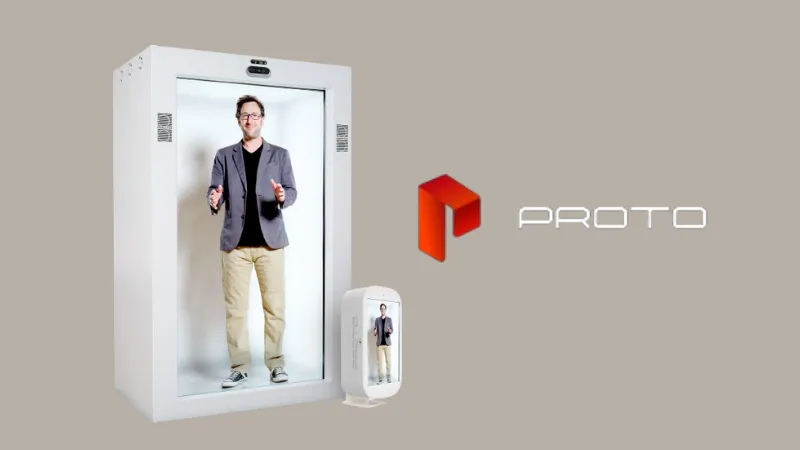
[Funding alert] CA-based Proto Hologram Secures an Investment from Cartan Capital

Medtech Startup Xenter Bags $58.25M in Series B Financing

Learning Platform Codio Raises $5M in Funding

AI Startup Veridion Raises $20M in Series A Funding Round
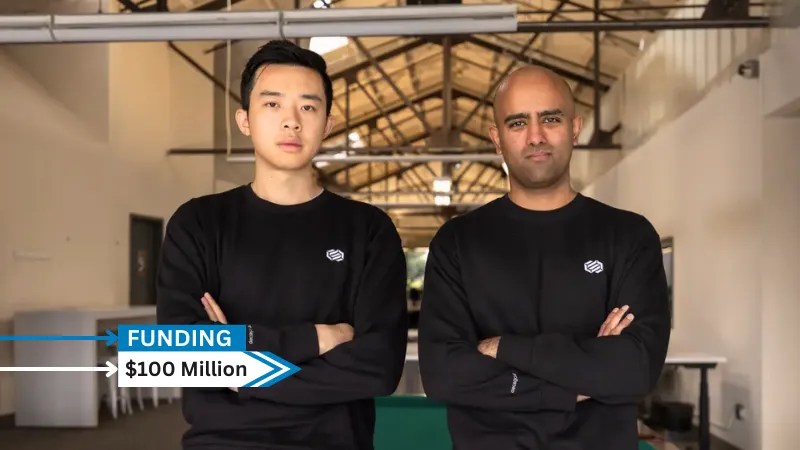
[Funding News] Decagon Secures $100 Mn Series B Funding

