

 Follow us
 Follow us
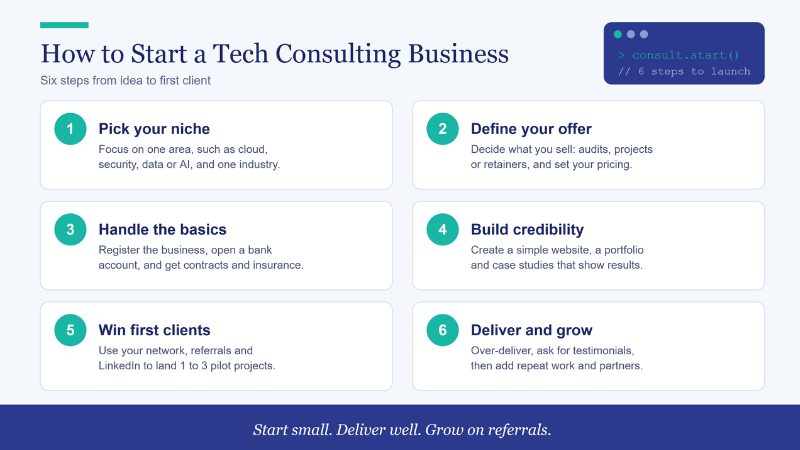
Starting a tech consulting business can be a good opportunity for people who have knowledge of technology, software, IT systems or digital tools. Many businesses need expert help to choose the right technology, improve their work processes, protect their data and grow their operations.
A tech consulting business helps companies solve these problems by offering advice and technical services. You can work alone as an independent consultant, start with a small team or build a company that serves clients in different countries.
In 2026, services related to artificial intelligence (AI), cloud computing, cybersecurity, data analytics and software development offer opportunities for technology consultants.
If you want to start your own tech consulting business, this guide explains how to choose your services, find clients, set prices and grow your company.
What Is a Tech Consulting Business?
A tech consulting business helps companies use technology to improve their work and solve business problems.
For example, a startup may need help choosing business software, while a larger company may want to move its data to the cloud or use AI to automate daily tasks.
A technology consultant understands the client's needs, suggests suitable solutions and may also help put those solutions into practice.
Common tech consulting services include:
- IT consulting: Helping companies improve their IT systems and choose the right technology.
- AI consulting: Helping businesses use AI tools and automate everyday tasks.
- Cybersecurity consulting: Helping companies protect their systems, networks and data.
- Cloud consulting: Helping businesses move to cloud services and manage their technology costs.
- Software consulting: Advising companies on choosing, building or improving software.
- Data consulting: Helping businesses organise data and use it to make better decisions.
You do not need to offer every service. Start with the area you know best and expand your services as your business grows.
1. Choose Your Tech Consulting Niche
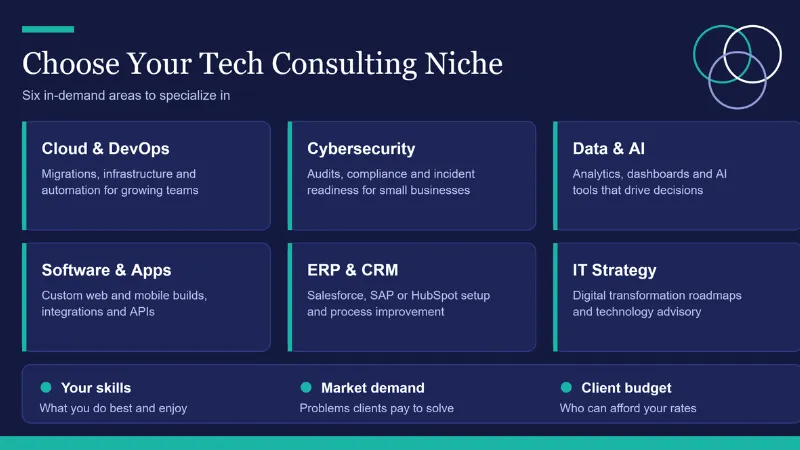
The first step is to decide which services you want to offer and which customers you want to work with.
Offering too many services at the beginning can make it difficult for customers to understand what your business does. It is better to focus on one area where you have the right skills and experience.
For example, you could help small businesses use AI tools, support startups with cloud services or help online stores improve their cybersecurity.
Before choosing your niche, consider your skills, the problems businesses need to solve and the services customers are willing to pay for.
A clear focus makes it easier to explain your services and attract the right clients.
2. Research the Market and Your Competitors
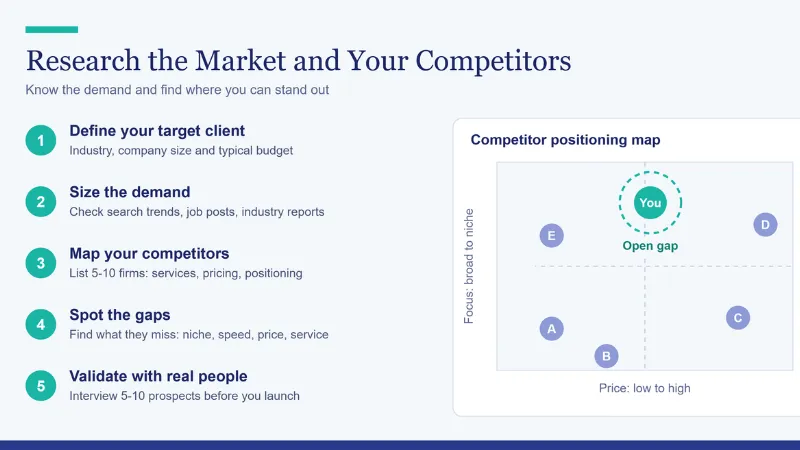
Before starting your business, learn about your target customers and the companies already offering similar services.
Find out what problems businesses face, which services they need and how other consultants help them. You can do this by researching business websites, reading industry reports and talking to potential customers.
Try speaking with business owners and managers to understand their technology challenges. Ask what problems they face, which solutions they have tried and where they need expert help.
This research can help you choose services that solve real problems.
You should also decide whether you want to work with startups, small businesses, large companies or a particular industry, such as healthcare, retail or financial services.
3. Create a Simple Business Plan
RECOMMENDED FOR YOU

AGI Explained: How Artificial General Intelligence Could Change AI
Devin Jacobs
Oct 3, 2026

Star Google researcher Noam Shazeer joins OpenAI in a coup for ChatGPT creator
Devin Jacobs
Jun 18, 2026

Most Valuable Latin American Brands by Brand Value in 2026
Devin Jacobs
Sep 28, 2026
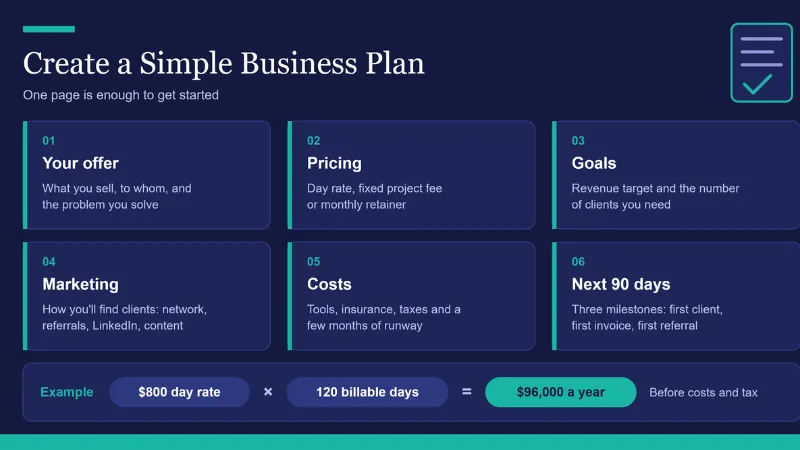
A business plan helps you understand how your consulting business will operate and make money.
You do not need a complicated document. Start by writing down the services you will offer, the customers you want to reach, your pricing and your plans for finding clients.
Next, calculate your expected expenses. These may include website costs, software subscriptions, business registration, insurance and payments to freelancers or employees.
You should also estimate how much money you need to earn each month to cover your expenses and make a profit.
Set realistic goals when starting. For example, focus on getting your first two or three paying clients before spending a lot of money on advertising, office space or hiring a large team.
4. Register Your Business and Complete the Legal Requirements
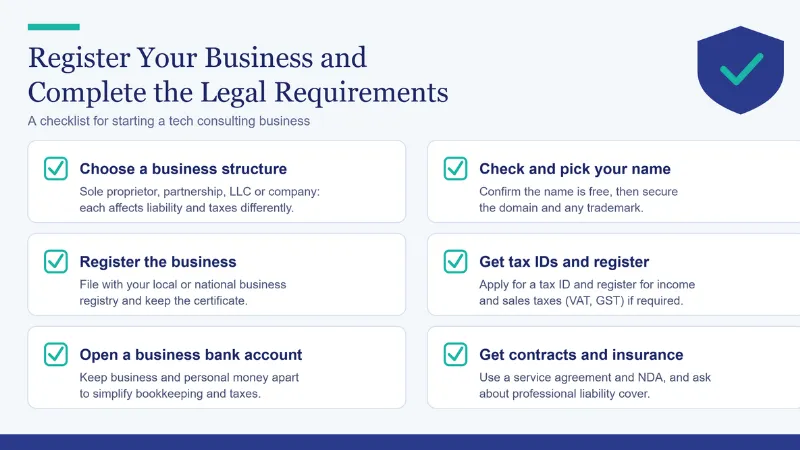
Once you have planned your services, choose a suitable business structure.
Your options depend on the country where you operate. In India, you may consider starting as a sole proprietor or registering a partnership, limited liability partnership (LLP) or private limited company.
Each option has different rules for taxes, legal responsibility and business compliance. Check the requirements that apply to your situation and seek professional advice if necessary.
You should also prepare a contract for your clients. It should explain the services you will provide, project deadlines, payment terms and responsibilities of both parties.
If you handle private customer information or business data, make sure you follow the relevant data protection and security rules. Depending on your work, professional liability or cyber insurance may also be useful.
5. Set the Right Prices for Your Services
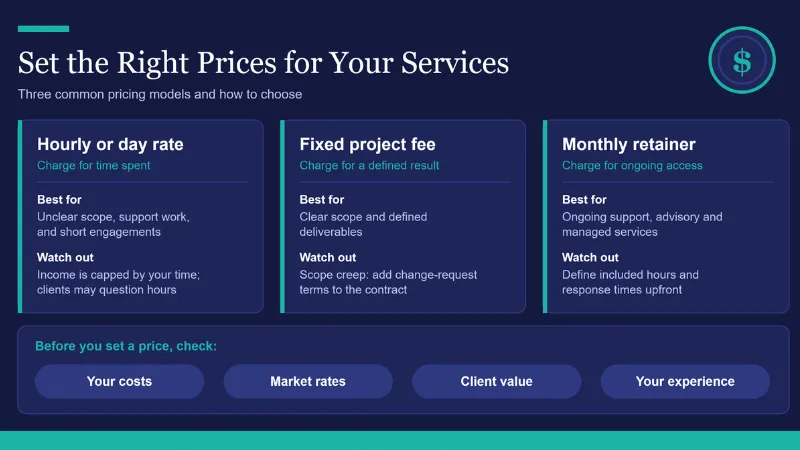
Your pricing should reflect your skills, the time required to complete the work and the value your services provide.
There are three common ways to charge clients:
- Hourly rate: Charge clients for the number of hours you work. This is useful for short projects or regular advice.
- Project-based pricing: Set one price for a specific project, such as reviewing a company's IT systems or helping it move to the cloud.
- Monthly retainer: Charge a fixed monthly fee for ongoing support, advice or maintenance.
For example, you could charge a fixed fee to review a company's technology needs and offer a separate price for implementing your recommendations.
Research what other consultants charge in your market. Make sure your fees cover your time, business expenses, taxes and the work needed to deliver good results.
As you gain experience and build a strong reputation, you can review your prices and adjust them according to the value you provide.
Read Also- 10 Best AI Startups in the USA
6. Build a Website and Online Presence
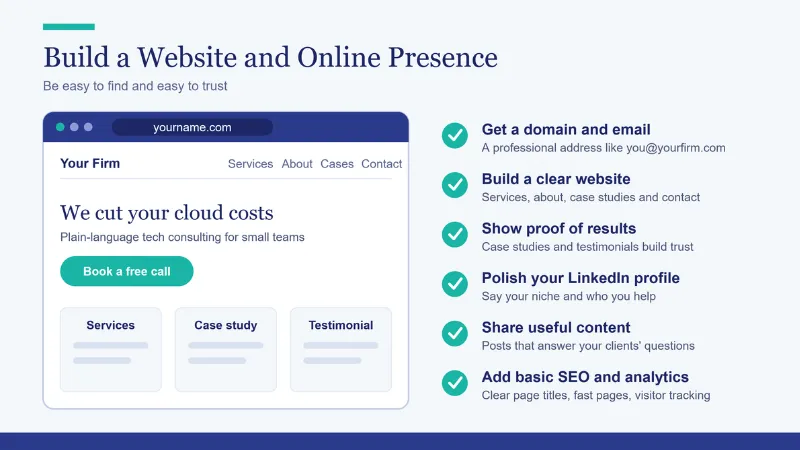
A professional website helps customers learn about your business and understand how you can help them.
Your website should clearly explain your services, the types of clients you work with, the problems you solve and how people can contact you.
Create a separate page for each major service. For example, if you offer AI consulting, you could have pages covering AI automation, AI implementation and AI strategy.
You can also publish helpful articles that answer common questions. Topics might include choosing cloud software, protecting business data or using AI to save time.
These efforts support search engine optimisation (SEO), which helps people find your website through search engines.
Answer engine optimisation (AEO) focuses on providing clear answers to specific questions, while generative engine optimisation (GEO) aims to make your content easier for AI-powered search tools to understand and reference.
Use simple language, helpful headings, accurate information and practical examples. These methods can improve your content's usefulness, although they cannot guarantee higher search rankings or AI visibility.
7. Find Your First Clients
Finding your first paying clients can be challenging, but there are several ways to get started.
Begin by contacting people in your professional network. Former colleagues, business contacts and industry connections may know companies that need technology support.
You can also use LinkedIn to connect with business owners, startup founders and IT managers. Share useful tips, explain the problems you solve and contact potential clients with personalised messages.
Other options include freelance platforms, business events, professional communities and partnerships with web development agencies or IT service providers.
Another approach is to offer a small service that solves one specific problem. For example, you could review a company's cloud spending or identify opportunities to automate its daily tasks.
If clients are happy with your work, they may recommend your services to others or hire you for additional projects.
8. Deliver Quality Work and Grow Your Business
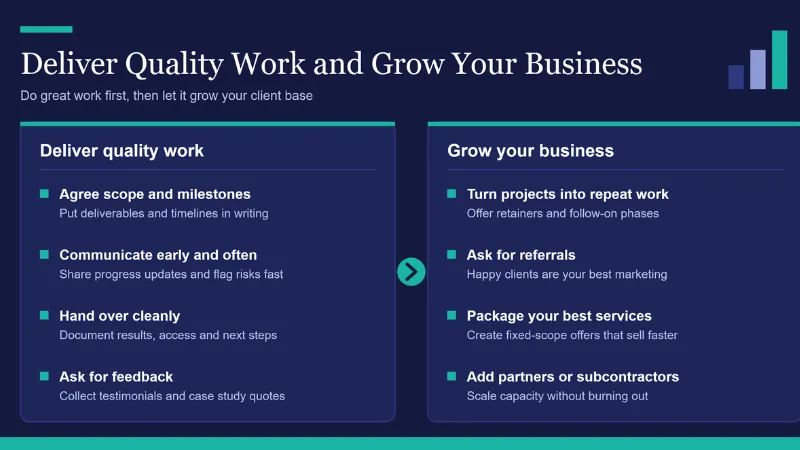
Getting clients is important, but keeping them happy is just as valuable.
Before starting a project, agree on what needs to be done, how long it will take and what results the client expects. Keep clients informed about progress and explain technical issues in simple language.
Whenever possible, show the results of your work. This could include lower technology costs, faster business processes, improved security or less time spent on manual tasks.
Ask satisfied clients for reviews or permission to share their results in case studies. Never share confidential information without permission.
As your business grows, you can hire specialists, work with contractors or create service packages for different customers. Monthly contracts can also help you build a more regular income.
Focus on delivering good work and building long-term client relationships before expanding too quickly.
How Much Does It Cost to Start a Tech Consulting Business?
The cost of starting a tech consulting business depends on the services you offer and where you operate.
An independent consultant may be able to start with an existing laptop, an internet connection, basic software and a simple website.
However, a business offering advanced cybersecurity, software development or cloud services may need specialist tools, additional staff and insurance.
You can keep your initial costs low by working from home, using essential software and hiring contractors when a project requires additional skills.
In the beginning, focus on building your skills, finding paying customers and providing services that solve real business problems.
Conclusion
Starting a tech consulting business requires technical skills, careful planning and a clear understanding of what customers need.
Begin by choosing a service area, researching the market and preparing a simple business plan. Register your business, set suitable prices and build a professional online presence.
Next, focus on finding your first clients and delivering results that help their businesses. As you gain experience and earn customer trust, you can expand your services, build a team and take on larger projects.
With the right approach, a tech consulting business can grow from a small independent service into a company that works with clients across different industries and markets.
Recommended Stories for You

Devin Jacobs Dec 6, 2025
Devin Jacobs Oct 3, 2026

Devin Jacobs Jul 27, 2026

Devin Jacobs Dec 12, 2025

Kuldeep Jangid Oct 2, 2026

Devin Jacobs Sep 14, 2026
Trending Stories
History of Artificial Intelligence: From Early Machines to Modern AI

How to Stop Apps From Starting Automatically in Windows
How can we tackle AI’s financial risks?
Star Google researcher Noam Shazeer joins OpenAI in a coup for ChatGPT creator

Common Startup Mistakes and How to Avoid Them
AGI Explained: How Artificial General Intelligence Could Change AI

Future of AI: How Artificial Intelligence Could Transform the Next 10 Years

10 Best AI Startups in the USA

