
What Companies Does Bill Gates Own? Complete List of His Investments and Businesses
Jul 27, 2026 | By Devin Jacobs
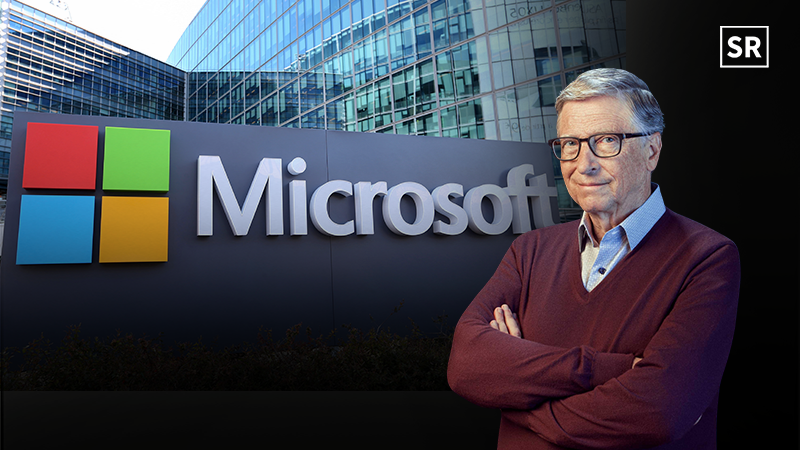
When people hear the name Bill Gates, the first thing that comes to mind is usually Microsoft. After all, he co-founded one of the world's most influential technology companies and helped shape the personal computer revolution. But today, Bill Gates is much more than the man behind Windows.
 Follow us
 Follow us
Over the years, his business interests have expanded far beyond software. Through his private investment company, Cascade Investment, and the Bill & Melinda Gates Foundation Trust, Gates has invested billions of dollars in industries such as transportation, hospitality, agriculture, healthcare, energy, manufacturing, and environmental technology.
Even though he left Microsoft's daily operations years ago, Gates is still regarded as one of the most reputable investors and philanthropists in the world. Instead of following fads, his investment approach concentrates on companies that can generate long-term value.
In this guide, we'll explore the companies Bill Gates founded, the businesses he owns stakes in, Microsoft's biggest acquisitions, and why his investment portfolio is far more diverse than many people realize.
RECOMMENDED FOR YOU


Who Is Bill Gates?
Bill Gates is an American entrepreneur, investor, software developer, and philanthropist. Born in Seattle, Washington, in 1955, Gates showed an interest in computers while he was still in school. Along with his childhood friend Paul Allen, he dreamed of putting a computer on every desk and in every home a vision that eventually became reality.
In 1975, the pair launched Microsoft, which would go on to become one of the most valuable companies in history.
Even after leaving Microsoft's leadership, Gates continued building his wealth through strategic investments instead of relying solely on his Microsoft shares. Today, he spends much of his time supporting global health, education, climate innovation, and clean energy while managing one of the world's most diversified investment portfolios.
Does Bill Gates Still Own Microsoft?
One of the biggest misconceptions is that Bill Gates still runs Microsoft.
The answer is no.
Gates stepped down as Microsoft's CEO in 2000, handing the role to Steve Ballmer. Later, he resigned as chairman before eventually leaving Microsoft's board of directors in 2020.
However, that doesn't mean he completely walked away.
Bill Gates still owns a relatively small personal stake in Microsoft after selling and donating millions of shares over the years. He has also said that he occasionally visits Microsoft's headquarters to discuss product ideas with engineering teams.
Microsoft: The Company That Changed Everything
Every conversation about Bill Gates starts with Microsoft.
Founded on April 4, 1975, by Bill Gates and Paul Allen, Microsoft started as a software company that developed programming tools for early personal computers.
Everything changed when Microsoft introduced the Windows operating system.
Windows quickly became the standard operating system for millions of computers worldwide, turning Microsoft into a technology powerhouse.
The business went well beyond operating systems in the ensuing decades.
Microsoft now works in many other industries, such as:
- Cloud computing with Microsoft Azure
- Software for office productivity
- The use of artificial intelligence
- Playing games on an Xbox
- Business software
- Security for enterprises
- Tools for developers
- Search engines
- Hardware
With a market value measured in trillions of dollars, Microsoft remains one of the world's largest publicly traded companies.
While Gates no longer manages the company, Microsoft remains the foundation of his fortune.
Microsoft's Biggest Acquisitions
One reason Microsoft continues to dominate the technology industry is its ability to acquire companies that strengthen its ecosystem.
Here are some of its biggest acquisitions.
Microsoft acquired LinkedIn in 2016 for more than $26 billion.
At first, many questioned why a software company would spend so much on a professional networking platform.
The answer became clear over time.
Today, LinkedIn integrates seamlessly with Microsoft Office, Outlook, Teams, and other productivity tools, creating a connected ecosystem for professionals worldwide.
GitHub
GitHub was another major acquisition.
Purchased in 2018 for $7.5 billion, GitHub gave Microsoft access to the world's largest community of software developers.
Instead of changing the platform dramatically, Microsoft allowed GitHub to remain largely independent while improving its integration with Azure and developer services.
Activision Blizzard
Activision Blizzard was acquired by Microsoft for $68.7 billion in 2023.
This turned out to become the biggest acquisition in the history of gaming.
The deal brought some of gaming's biggest franchises under Microsoft's umbrella, including:
- Call of Duty
- Diablo
- World of Warcraft
- Candy Crush
- Overwatch
The acquisition significantly expanded Microsoft's gaming business and strengthened Xbox's position in the global market.
Skype
Before video calls became part of daily life, Skype was already connecting millions of people worldwide.
Microsoft purchased Skype in 2011 for $8.5 billion.
Although Microsoft Teams has since become its flagship communication platform, Skype played an important role in Microsoft's transition toward online collaboration.
Companies Bill Gates Invests In
Unlike Elon Musk or Jeff Bezos, Bill Gates doesn't spend much time launching new companies anymore.
Instead, he focuses on investing in established businesses with strong long-term potential.
Most of these investments are managed through Cascade Investment, his private investment firm.
Berkshire Hathaway
One of Gates' largest investments is Berkshire Hathaway.
The multinational conglomerate, led for decades by Warren Buffett, owns businesses across insurance, railroads, energy, manufacturing, retail, and consumer products.
Buffett and Gates have been close friends for more than thirty years.
Although Gates resigned from Berkshire Hathaway's board in 2020, the Gates Foundation continues holding billions of dollars worth of Berkshire shares.
For Gates, Berkshire represents exactly the type of business he prefers: stable, diversified, and built for the long run.
Four Seasons Hotels & Resorts
Luxury hotels might seem like an unusual investment for a technology entrepreneur, but Gates saw long-term opportunity in hospitality.
Through Cascade Investment, he became the majority owner of Four Seasons Hotels & Resorts.
The company operates luxury hotels and private residences in dozens of countries.
Rather than focusing on rapid expansion, Four Seasons has built its reputation around premium customer service and world-class hospitality.
Gates reportedly increased his ownership during the pandemic, believing global travel would eventually recover.
That decision has largely paid off as international tourism continues to grow.
Canadian National Railway
Railroads may not grab headlines the way artificial intelligence or electric vehicles do, but they're essential to the economy.
Canadian National Railway operates one of North America's largest rail networks, transporting goods across Canada and the United States.
Gates has long viewed transportation infrastructure as a reliable long-term investment because businesses will always need efficient freight services.
The railway remains one of the largest holdings within the Gates Foundation portfolio.
Caterpillar
Caterpillar is another example of Gates investing outside the technology sector.
Known worldwide for manufacturing construction equipment, mining machinery, and industrial engines, Caterpillar benefits from global infrastructure spending.
Whenever countries build roads, bridges, factories, or energy projects, there's a good chance Caterpillar equipment is involved.
For Gates, it's a business with steady demand and global reach.
Deere & Company
When people think about Bill Gates, farming equipment probably isn't the first thing that comes to mind. Yet Deere & Company, better known as John Deere, has been one of the most valuable businesses in his investment portfolio.
Since its founding in 1837, John Deere has expanded to become one of the biggest producers of construction equipment, harvesters, tractors, and precision farming equipment worldwide. The corporation continues to be a key player in the world's food production as agriculture grows more reliant on automation and data-driven farming.
With millions of shares, the Gates Foundation is one of the largest institutional investors in Deere. Given that Gates has often talked about improving agricultural and food security, this investment aligns with both his financial goals and his charitable aims.
Waste Management
Trash collection might not sound exciting, but it's one of the most dependable businesses in the world.
Waste Management is North America's largest waste disposal and recycling company. Every day, millions of homes and businesses rely on its services to collect, recycle, and safely dispose of waste.
For long-term investors like Bill Gates, companies such as Waste Management offer something extremely valuable: consistent demand.
No matter what happens to the economy, cities still need waste collection.
Waste Management has grown to be one of the Gates Foundation's biggest assets in part because of this. The corporation is becoming a more significant player in environmental sustainability by investing extensively in recycling technologies, landfill energy projects, and renewable natural gas in addition to typical waste services.
Ecolab
Another business that rarely makes headlines but quietly dominates its industry is Ecolab.
The company provides cleaning, sanitation, water treatment, and food safety solutions to hotels, restaurants, hospitals, manufacturing plants, and industrial facilities around the world.
After the COVID-19 pandemic, hygiene and sanitation became even more important across every industry.
Ecolab's services help businesses reduce water usage, improve food safety, and maintain cleaner working environments.
Bill Gates has maintained a significant investment in Ecolab for years because it operates in an industry with steady long-term demand rather than temporary market trends.
FedEx
Global commerce depends on logistics, and Bill Gates understands that better than most investors.
That's why the Gates Foundation owns shares in FedEx, one of the world's largest delivery companies.
FedEx moves millions of packages every day through its enormous network of aircraft, trucks, and distribution centers.
The growth of online shopping has only increased demand for reliable delivery services.
Although logistics companies face rising fuel costs and economic fluctuations, Gates views businesses like FedEx as essential infrastructure supporting the global economy.
UPS
Alongside FedEx, Bill Gates has also invested in United Parcel Service (UPS).
UPS has been delivering packages for more than a century and operates in over 200 countries.
While many investors choose one logistics company over another, Gates has historically invested in both because each benefits from the continued expansion of e-commerce and international trade.
Instead of trying to predict which company will outperform every year, his strategy often focuses on industries that are likely to keep growing over decades.
TerraPower
Among all of Bill Gates' businesses and investments, TerraPower may be the most ambitious.
Gates co-founded TerraPower in 2006 with the goal of developing next-generation nuclear reactors.
Unlike traditional nuclear plants, TerraPower is working on advanced reactor designs that promise to be safer, more efficient, and capable of producing clean electricity with lower carbon emissions.
The company has attracted billions of dollars in funding and continues working with governments and energy partners to build commercial reactors.
For Gates, TerraPower isn't simply another investment.
It's part of his broader mission to fight climate change while meeting growing global energy demands.
Breakthrough Energy
Bill Gates' passion for climate innovation doesn't stop with TerraPower.
He also founded Breakthrough Energy, an organization that invests in startups developing technologies to reduce greenhouse gas emissions.
Instead of focusing on a single industry, Breakthrough Energy supports companies working in:
- Clean electricity
- Sustainable aviation fuel
- Carbon removal
- Green hydrogen
- Battery technology
- Industrial manufacturing
- Agriculture
Many of these businesses are still in their early stages, but Gates believes they could become essential for achieving net-zero emissions in the future.
BENlabs
Another lesser-known investment is BENlabs, formerly known as Branded Entertainment Network.
The company specializes in product placement, influencer marketing, and brand partnerships across movies, television, streaming platforms, and social media.
BENlabs evolved from Gates' earlier digital media company, Corbis.
Although it doesn't receive the same attention as Microsoft or Four Seasons, it represents another example of Gates investing in businesses that connect technology, media, and advertising.
Bill Gates' Investment Philosophy
One lesson investors often learn from Bill Gates is patience.
Unlike traders who buy and sell constantly, Gates usually invests with a long-term mindset.
He looks for companies that:
- Have strong competitive advantages
- Operate in essential industries
- Generate reliable profits
- Continue innovating
- Have experienced management teams
His investment decisions also reflect his personal interests.
Healthcare, education, agriculture, renewable energy, and climate technology all appear frequently throughout his portfolio because he believes they can improve lives while creating long-term value.
Conclusion
Even while Microsoft helped Bill Gates amass his wealth, his current corporate empire goes well beyond software.
From luxury hotels and railroads to farming equipment, logistics companies, clean energy startups, and environmental technology, his investments reflect a long-term vision rather than short-term profits.
Instead of concentrating all his wealth in one industry, Gates has built a remarkably diversified portfolio capable of generating value across multiple sectors.
Whether through Cascade Investment or the Gates Foundation, his investment strategy continues influencing industries around the world while supporting innovations designed to address global challenges.
The list of businesses that Bill Gates owns extends well beyond Microsoft. He has one of the most varied and well-managed financial portfolios of any billionaire in existence today.
FAQs
What is Cascade Investment?
What are Bill Gates' biggest investments outside Microsoft?
Besides Microsoft, what companies does Bill Gates own?
Does Bill Gates personally own all of these companies?
What is Cascade Investment, and why is it important?
What are Bill Gates’ biggest investments outside the tech industry?
How much is Bill Gates worth today?
Does Bill Gates still own Microsoft?
Recommended Stories for You
Devin Jacobs Dec 30, 2025
Devin Jacobs Dec 31, 2025

Devin Jacobs Dec 6, 2025
Devin Jacobs Jun 18, 2026
Devin Jacobs Dec 29, 2023

Devin Jacobs Jan 2, 2024
Trending Stories

Top 10 Best Crowdfunding Platforms in USA
Star Google researcher Noam Shazeer joins OpenAI in a coup for ChatGPT creator
Top 10 Salon Companies in the USA

Best Mens Grooming Brands in USA

Top 10 Defence Tech Startups in USA

Top Shared Calendar Apps to Use for Business

Top Buy Now Pay Later (BNPL) startups in the USA

Top EdTech Startups in the USA

