

History of Artificial Intelligence: From Early Machines to Modern AI
Sep 14, 2026 | By Devin Jacobs
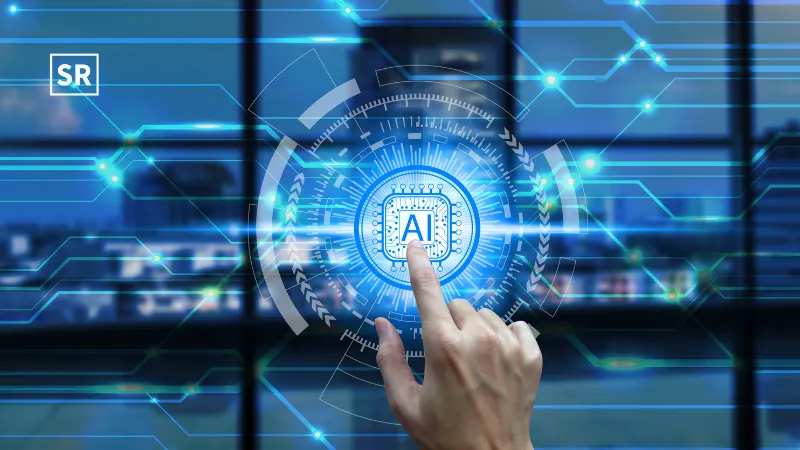
These days, ChatGPT, AI-generated graphics, self-driving cars, and virtual assistants are frequently brought up while discussing artificial intelligence. These technologies can lead one to believe that artificial intelligence (AI) has emerged virtually overnight.
 Follow us
 Follow us
The concept of making a machine which is capable of mimicking human intelligence has existed for a very long time. From mechanical innovations, early computers, mathematical concepts, and decades of research, what we today refer to as artificial intelligence developed gradually.
Some scientists predicted that computers would develop intelligence far sooner than they really did. During the early days, there were lots of times when the funding vanished, and interest in AI declined at various times.
In this article , we will cover all the details.
RECOMMENDED FOR YOU



What Companies Does Bill Gates Own? Complete List of His Investments and Businesses
Devin Jacobs
Jul 27, 2026
What Is AI?
Artificial intelligence is a branch of computer science concerned with building systems that can carry out tasks normally associated with human intelligence.
It comes with lots of options such as pattern recognition, problem-solving, language comprehension, data-driven learning, and decision-making as some of the best examples.
Large volumes of data can be processed quickly by today's AI systems. Instead of depending just on programmer-written instructions, some people can also learn via examples.
The history of artificial intelligence:
The concept of "artificial intelligence" dates back thousands of years, to the time when ancient philosophers were debating issues related to life and death. Inventors created mechanical devices known as "automatons" in antiquity that operated without human assistance. The ancient Greek term "automaton" implies "acting of one's own will." A mechanical pigeon made by a friend of the philosopher Plato is mentioned in one of the first accounts of an automaton, which dates back to 400 BCE. Many years later, in 1495, Leonardo da Vinci built one of the most well-known automatons.
For the purposes of this article, we will concentrate on the 20th century, when scientists and engineers started to make progress toward our current AI, even if the concept of a computer being able to operate independently is not new.
The 1950s: AI Gets Its Name
Alan Turing, a British mathematician, released his famous work Computer Machinery and Intelligence in 1950. Rather than devoting all of his time to discussing whether a computer could actually "think," Turing proposed an alternative question: could a machine act convincingly enough in a conversation that an individual could not consistently distinguish it from a human?
Researchers were already experimenting with computers which could do more than simple calculations.
In 1952, Arthur Samuel created a program for playing checkers. His work was particularly intriguing because experience may make the algorithm better. Because of its prior performance, it became an early example of machine learning.
Groundwork for AI: 1900-1950
The concept of artificial humans was the subject of a lot of media produced in the early 20th century. So much so that a variety of experts began to wonder if it would be possible to build an artificial brain. Even though the term "robots" was first used in a Czech play in 1921, some inventors even created some somewhat basic prototypes of what we now refer to as "robots." Most of these were steam-powered, and some of them had the ability to walk and make facial expressions.
- Gakutensoku, the first Japanese robot, was created in 1929 by Japanese scientist Makoto Nishimura.
- In his 1949 book "Giant Brains, or Machines that Think," computer scientist Edmund Callis Berkley made a comparison between the human brain and the more recent computer models.
- Czech playwright Karel Čapek introduced the idea of the "artificial people," or robots, in his science fiction play "Rossum's Universal Robots," published in 1921. *
When the Excitement Faded
Funding, processing power, and patience were required for AI development. Some of the anticipated breakthroughs did not materialise in a timely manner throughout the 1970s.
This persistence was important since some of the ideas being studied in these slower years would come in handy much later.
The AI Boom of the 1980s
Known today as the "AI boom," the majority of the 1980s saw a time of explosive growth and interest in AI. This resulted from both new government funds to support the researchers and scientific advancements. Expert systems and deep learning approaches gained popularity, enabling computers to learn from their mistakes and make judgments on their own.

Some of the Notable dates are:
1980: First conference of the AAAI was held at Stanford.
1980: XCON (expert configurer), the first expert system, entered the commercial market. It was created to help with computer system ordering by automatically selecting parts according to the requirements of the client.
1981: The Japanese government contributed approx. $850 million, which is more than $2 billion in today's currency, to the Fifth Generation Computer project.
1984: The AAAI warns of an impending "AI Winter" that would result in less funding and interest, making research much more challenging.
1985: AARON, an autonomous sketching program, is showcased at the AAAI conference.
1986 saw the development and demonstration of the first autonomous vehicle (also known as a robot automobile) by Ernst Dickmann and his colleagues at Bundeswehr University of Munich. On highways with no other impediments or human vehicles, it might reach speeds of up to 55 mph.
The AI Winter
It had started to wane by the late 1980s.
Businesses were more wary about AI, investment fell, and some significant initiatives were scaled back or abandoned.
The AI Winter was the name given to this time frame.
It was characterised by decreased funding and a decline in interest in AI research and continued until the early 1990s.
It would be oversimplified to say that the field had failed.
Researchers continued to advance. Research on robots, computer vision, machine learning, and speech recognition persisted.
AI Starts Showing Up in the Real World
Better computers and new AI potential emerged in the 1990s.
In 1997, there was one instance that attracted public notice. Chess champion Garry Kasparov was vanquished by IBM's Deep Blue.
It was an incredible feat for a computer to defeat one of the best chess players in the world. It demonstrated that extremely complex activities, including the planning and assessment of numerous potential moves, may be handled by robots.
The value of speech recognition technologies increased. The capabilities of robots increased. Real-world settings were being used to test autonomous systems.
In 2002, the Roomba robotic Hoover cleaner brought fundamental autonomous technologies into homes.
Generative AI Changes the Conversation
GPT-3, a language model that can produce remarkably fluent text, was launched by OpenAI in 2020.
AI was soon shown to be capable of producing visuals from written descriptions by programs like DALL-E.
The general public can now experience AI far more easily because of these advancements.
To try it, you didn't have to be familiar with neural networks or work for a tech company. To view what the system generated, you may just type a request.
Because of its accessibility, AI has become a widely used technology.
AI is being used to write and summarise text, produce graphics, translate languages, analyse data, develop software, respond to enquiries, and automate routine chores.
AI Today
Modern artificial intelligence is built on many years of work.
Computers are more powerful than anything available to researchers in the early days of artificial intelligence. Additionally, there is a lot more digital data available for testing and training systems.
While cloud computing has made advanced AI tools accessible to individuals and enterprises worldwide, machine learning and deep learning have altered the capabilities of computers.
AI is currently utilised in many different businesses.
Businesses utilise it for forecasting, data analysis, software development, automation, fraud detection, customer service, and marketing. Search engines, smartphones, recommendation algorithms, creative software, and other commonplace items are examples of how consumers come upon it.
Technology is no longer a general idea.
Conclusion
The history of artificial intelligence is not one of a single invention that drastically alters the world. It is a lengthy series of concepts and experiments.
Questions of artificial beings were sparked by the mechanical devices of the past. These inquiries were transformed into experiments by early computer researchers. The science of artificial intelligence (AI) began to take shape in the 1950s, went through exciting and disappointing times, and eventually became more beneficial as computers, data, and algorithms advanced.
Today, we use AI as a result of all those years of work.
And the story is still being written.
What seems normal now would have been almost impossible to imagine when the first AI researchers were writing their programs. The next few decades may bring changes that are just as difficult for us to predict.
FAQs
When did artificial intelligence begin?
Who is the father of artificial intelligence?
What was the AI winter?
When did AI become popular?
What is the future of artificial intelligence?
What was the first AI program?
Recommended Stories for You

Devin Jacobs Dec 12, 2025

Devin Jacobs Jan 2, 2024

Devin Jacobs Dec 27, 2025

Devin Jacobs Dec 31, 2025
Devin Jacobs Dec 26, 2025
Devin Jacobs Jul 27, 2026
Trending Stories

Top 10 Best Crowdfunding Platforms in USA
Star Google researcher Noam Shazeer joins OpenAI in a coup for ChatGPT creator

Top 10 Salon Companies in the USA
Best Mens Grooming Brands in USA

Top 10 Defence Tech Startups in USA

Top Shared Calendar Apps to Use for Business
Top Buy Now Pay Later (BNPL) startups in the USA

Top EdTech Startups in the USA

