

Blacksmith Secures $66M in Series C Funding Led by Sequoia Capital
Oct 22, 2026 | By Devin Jacobs
SUMMARY
- Blacksmith raised $66 million in Series C funding.
- The funds will support hiring and computing capacity.
- Blacksmith helps companies build and test code faster.
 Follow us
 Follow us
Blacksmith, a San Francisco, CA-based provider of an infrastructure platform for building and testing code, has raised $66 million in a Series C funding round, bringing the total amount to $125 million, at a $1 billion valuation.
The round was led by Sequoia Capital with participation from Premji Invest, Peak XV Partners, GV, and Y Combinator.
The company will use the funds to expand its team and increase its computing capacity.
What is Blacksmith?
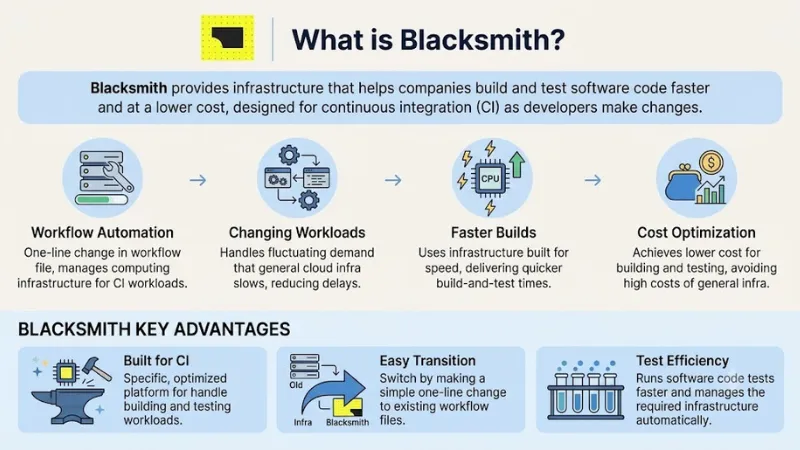
Blacksmith provides infrastructure that helps companies build and test software code faster and at a lower cost. Its platform is designed for continuous integration (CI), a process that automatically builds and tests code as developers make changes.
Read More:Otter.ai Raises $320M in Funding from General Catalyst
Many companies use general-purpose cloud infrastructure for CI workloads. However, demand can change quickly, leading to delays, slower builds and higher costs. Blacksmith has built its infrastructure specifically to handle these changing workloads.
Companies can switch to Blacksmith by making a one-line change to their workflow file. The platform then manages the computing infrastructure needed to run their builds and tests.
RECOMMENDED FOR YOU


How Much Funding Has Blacksmith Raised?
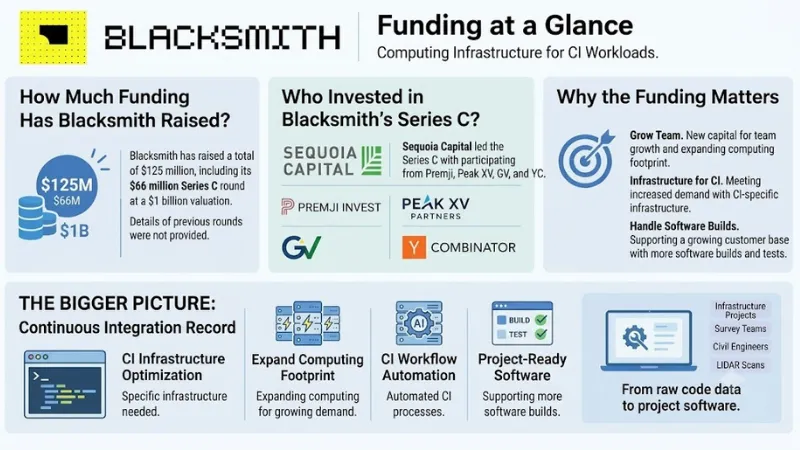
Blacksmith has raised $125 million in total funding following its latest $66 million Series C round.
The company was valued at $1 billion in the latest round. Details of its previous funding amounts and dates were not provided in the announcement.
Who Invested in Blacksmith’s Series C?
Sequoia Capital led Blacksmith's $66 million Series C funding round.
Other participating investors included Premji Invest, Peak XV Partners, GV and Y Combinator.
Why the Funding Matters
Blacksmith plans to use the new capital to grow its team and expand its computing footprint.
As companies produce more code, their need for computing resources to build and test software can increase sharply. Blacksmith aims to address this demand with infrastructure designed specifically for CI workloads.
The planned expansion will support the company's growing customer base and its need to handle more software builds and tests.
Who founded Blacksmith?
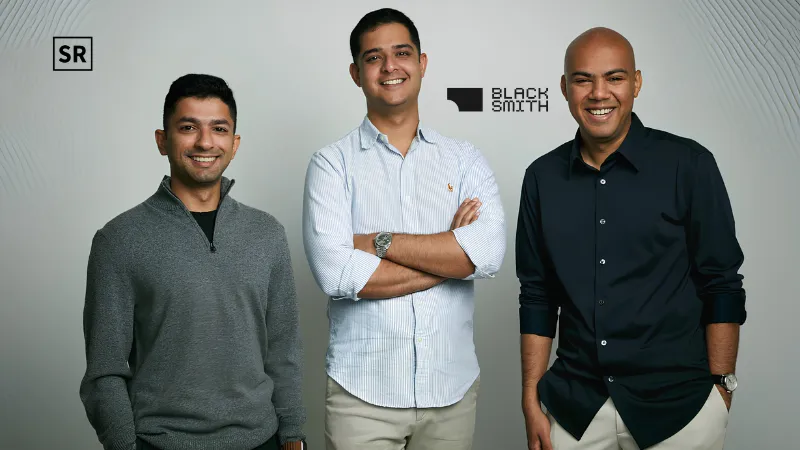
Blacksmith was founded in 2024 by Aditya (JP) Jayaprakash, Aayush Shah and Aditya Maru.
The company is headquartered in San Francisco, California.
"Since Claude Code took off in March, almost every conversation we've had with a large engineering team has started the same way. Developers who used to push three or four pull requests a day are now pushing orders of magnitude more and their CI infrastructure can't keep up. We're grateful to our customers who are trusting us to solve this bottleneck, and excited to partner with Sequoia to solve it at scale," said Aditya "JP" Jayaprakash, co-founder and CEO of Blacksmith.
"JP and team understood early that as AI agents wrote more code, the infrastructure to build and test it would need to change," said Isaiah Boone, Partner at Sequoia Capital. "What stood out to us was their deep systems expertise and speed of execution. That has translated into a product that helps their customers test and ship their software faster.
Market and Business Growth
Blacksmith has seen strong growth in usage and revenue. Since January, the number of CI jobs running on its platform each week has increased from 5 million to more than 90 million. Its annual recurring revenue has grown 17 times over the same period.
More than 10,000 companies use Blacksmith, including Ashby, Granola, Handshake and LangChain.
The company manages nearly 10 megawatts of computing capacity across data centres in the United States and Europe. It is on track to increase that capacity at least fivefold in 2027.
What Happens Next?
Blacksmith plans to expand its team and computing infrastructure following the Series C funding round. The company expects to increase its computing footprint significantly in 2027 to support rising demand from businesses using its platform.
Read More:Mach9 Raises $34M in Series A Funding for AI CAD Software
Recommended Stories for You

Startuprise Sep 23, 2025

Team SR Sep 17, 2024

Devin Jacobs Jun 6, 2026

Devin Jacobs Oct 14, 2026

Devin Jacobs Jun 9, 2026

Devin Jacobs Feb 29, 2024
Trending Stories
Star Google researcher Noam Shazeer joins OpenAI in a coup for ChatGPT creator

Efficient Computer Gats $97M in Series B Funding Led by TQ Ventures

AI Startup Volantis Raises $88M in Series A Funding

California-Based Snorkel AI Raises $350M in Series C Funding

Fintech Startup Yeeld Partners with Colorado-Based Housecall Pro

Sweet Oak Acquires Whole Earth Brands

California-Based Delos Data Raises Over $100M in Funding

California-Based Armadin Raises $255.5M in Series B Funding

