

SUMMARY
- Dream Labs raised $90 million in seed funding.
- The funds will support AI development and expansion.
- Dream Labs builds AI models for robots.
 Follow us
 Follow us
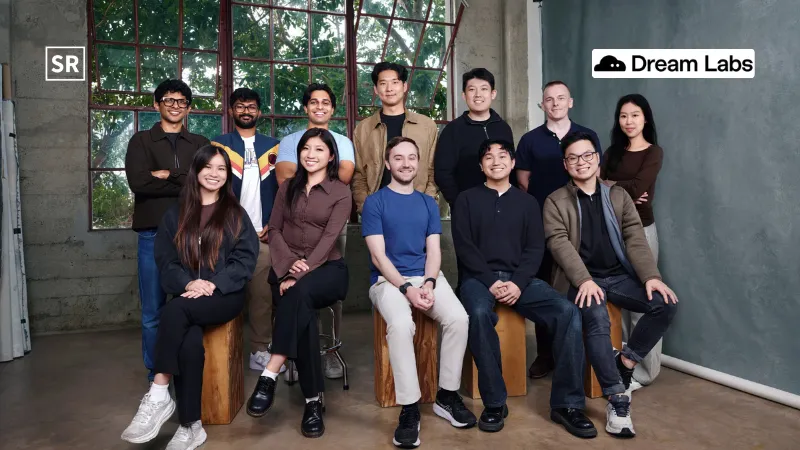
Dream Labs, a San Francisco, CA-based provider of an AI platform that builds foundation models for robots, has raised $90 million in a seed funding round led by B Capital.
The round also saw participation from Kindred Ventures, A.Capital, Unusual Ventures, SV Angel, Wing VC, Scribble VC, and Adrian Aoun, among others.
The company plans to use the funding mainly for computing resources and to expand the range of tasks and robots its technology can support.
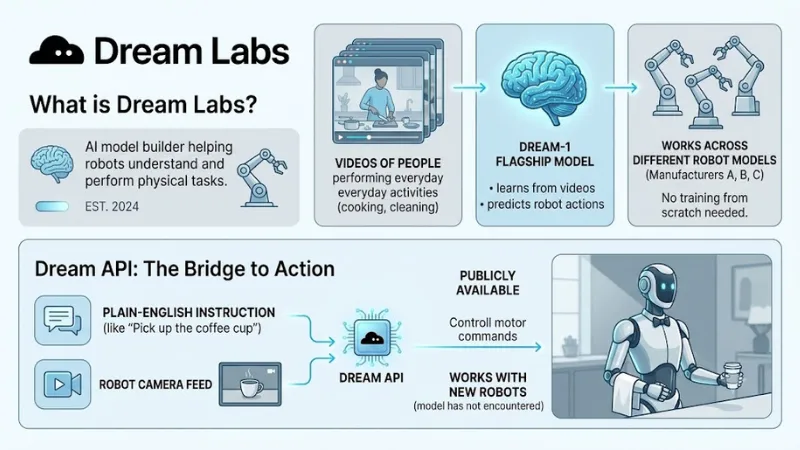
What is Dream Labs?
Dream Labs builds AI models designed to help robots understand and perform physical tasks. Its flagship model, Dream-1, learns from videos of people performing everyday activities and uses that information to predict actions for robots.
Read More:Different Secures $48M in Seed Funding Led by General Catalyst
Unlike traditional robots that are programmed for specific tasks, Dream-1 is designed to work across different robot models and manufacturers. This allows robots to perform tasks without requiring developers to train each machine from scratch.
The company has also launched Dream API, which converts a robot's camera feed and a plain-English instruction into motor commands. The API is publicly available and can work with robots the model has not encountered before.
RECOMMENDED FOR YOU


[Funding alert] CA-based PipeDreams Secures $25.5Million in Series A Round Funding
Devin Jacobs
Mar 27, 2024

How Much Funding Has Dream Labs Raised?
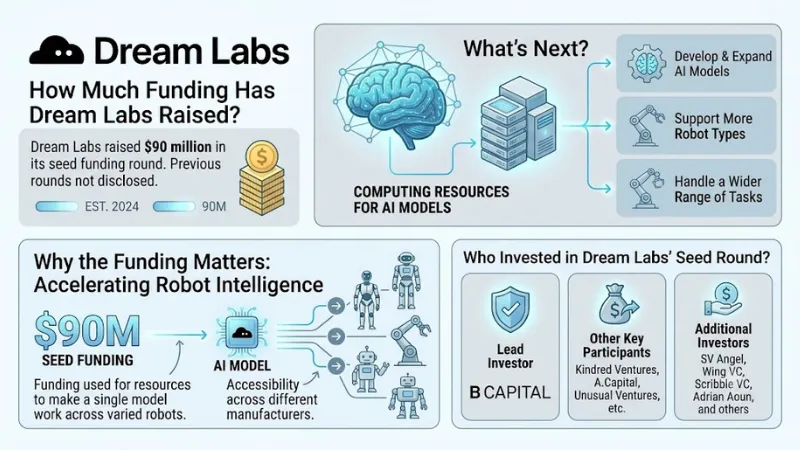
Dream Labs has raised $90 million in its seed funding round. The company has not disclosed any previous funding rounds or an overall funding total beyond this announcement.
Who Invested in Dream Labs’ Seed Round?
The $90 million seed round was led by B Capital.
Other participants included Kindred Ventures, A.Capital, Unusual Ventures, SV Angel, Wing VC, Scribble VC, and Adrian Aoun, among others.
Why the Funding Matters
Dream Labs plans to use most of the funding for computing resources to develop and expand its AI models. The investment will help the company support more types of robots, handle a wider range of tasks, and serve more users.
The company aims to make robot intelligence more accessible by allowing a single AI model to work across machines from different manufacturers.
Who founded Dream Labs?
Dream Labs was founded in 2026 by Joel Jang. The company is headquartered in San Francisco, California.
"The hardware is ready. What's been missing is a brain any robot can use," said Joel Jang, co-founder and CEO of Dream Labs. "When you get into a rental car, you don't relearn how to drive. You find the controls and your past driving experience does the rest. Dream-1 approaches a new robot the same way, so a new robot can do useful work in minutes, not months.
"A capable robot arm has gone from the price of a luxury car to the price of a high-end laptop. What it needs now is intelligence," said Daisy Cai, General Partner at B Capital. "This team did some of the defining work in robot learning at NVIDIA. Now anyone with an API key can build on it."
Market and Business Growth
Dream Labs works with more than 20 hardware partners. The robots it currently supports cost approximately $2,000 to $10,000.
Its Dream-1 model can control robots equipped with grippers without requiring additional training data. The company also works with its hardware partners to refine the model for individual robots.
Dream-1 currently supports tabletop tasks such as picking up and placing objects and folding laundry. Dream Labs plans to extend its capabilities to wheeled mobile robots and robots with dexterous hands.
The company says the technology addresses a major challenge in robotics: robots are often designed for individual tasks, and transferring their capabilities to different machines can require significant time and specialist work.
What Happens Next?
Dream Labs plans to expand the tasks its AI models can perform, support more robot types, and increase access to its technology through Dream API.
The company will also continue improving Dream-1 for its hardware partners as it works towards making general-purpose robot intelligence available across different machines.
Read More:Sunlight AI Secures $17.4M in Seed Funding Led by Basis Set Ventures
Recommended Stories for You

Devin Jacobs Apr 17, 2026

Devin Jacobs May 14, 2024


Devin Jacobs Jun 22, 2026

Devin Jacobs Aug 26, 2026

Startuprise Nov 2, 2025
Trending Stories
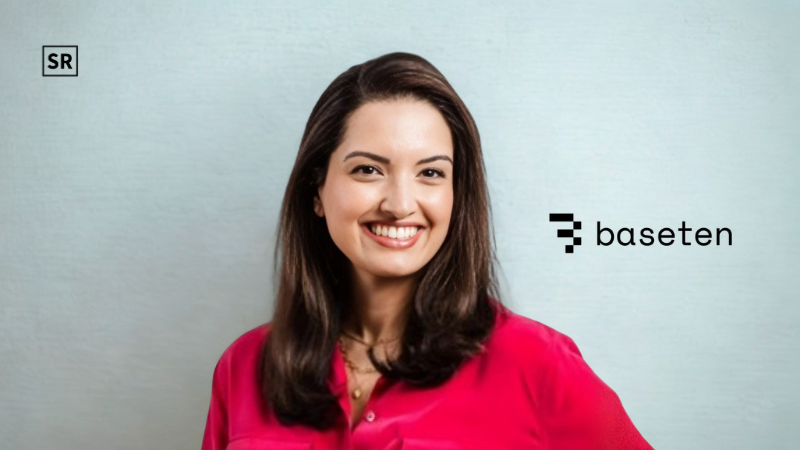
Baseten Appoints Sheila Vashee as Chief Marketing Officer
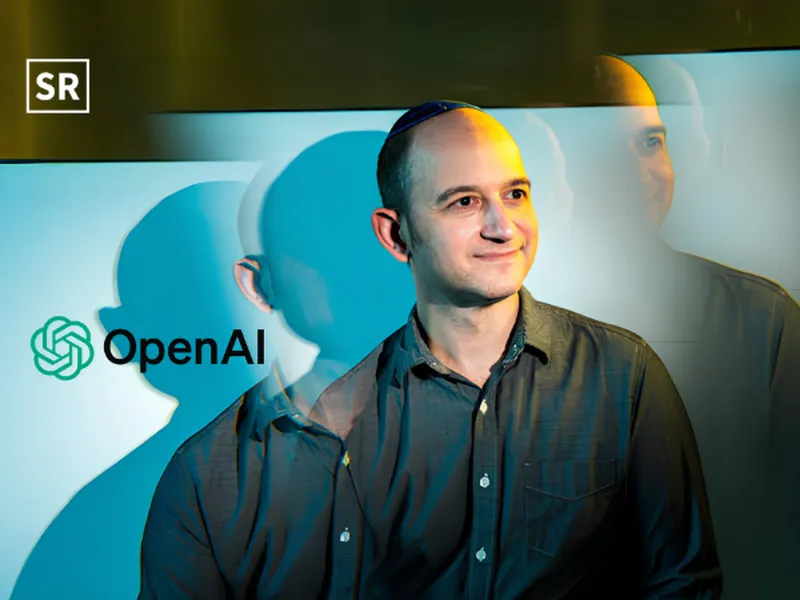
Star Google researcher Noam Shazeer joins OpenAI in a coup for ChatGPT creator

Sweet Oak Acquires Whole Earth Brands
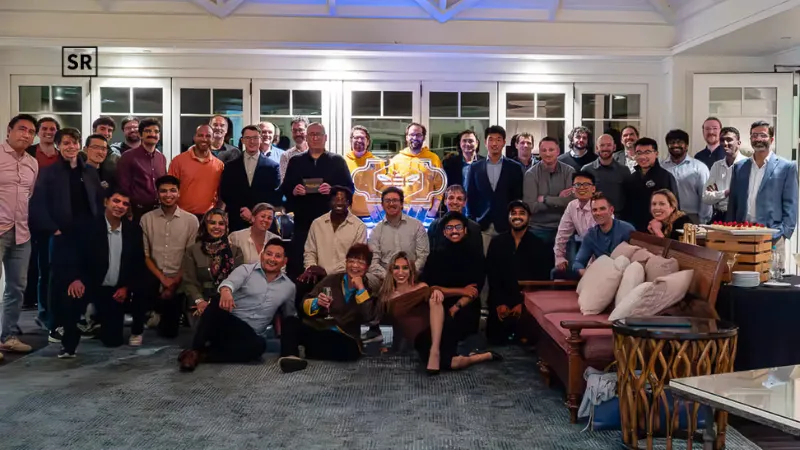
Efficient Computer Gats $97M in Series B Funding Led by TQ Ventures

AI Startup Volantis Raises $88M in Series A Funding
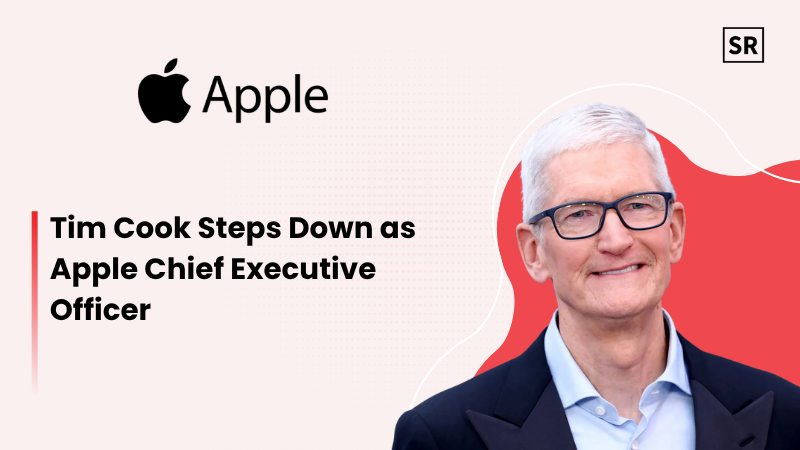
Tim Cook Steps Down as Apple Chief Executive Officer

California-Based Snap Appoints Ronan Harris as Chief Commercial Officer
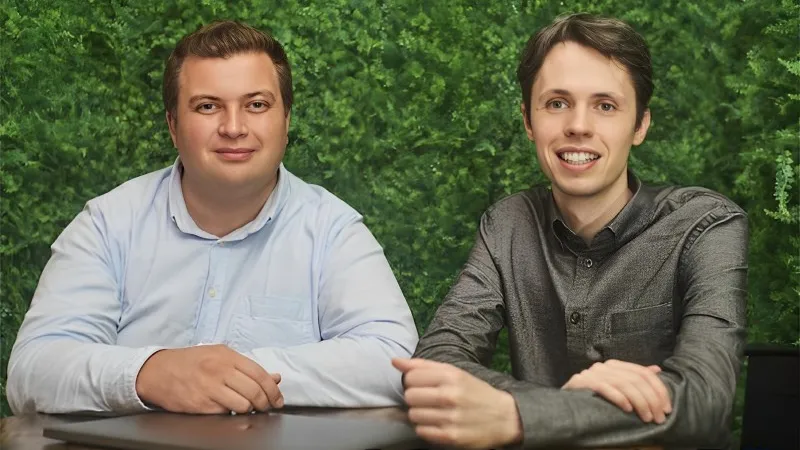
[Funding alert] MaintainX Secures $50 Mn Funding led by Bain Capital Ventures

