
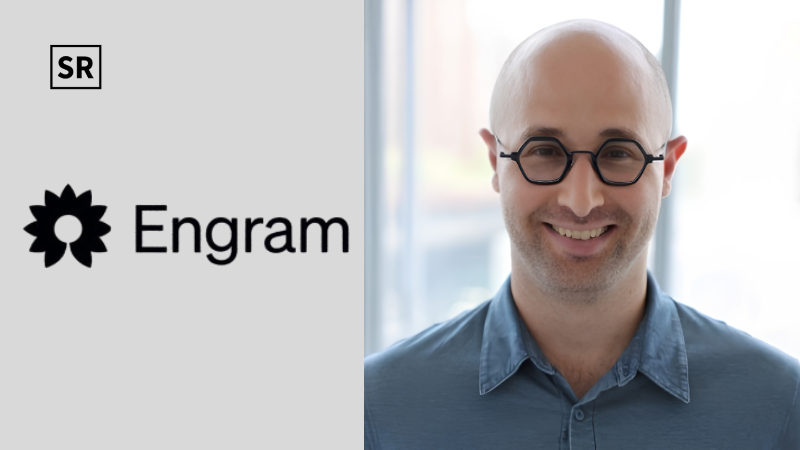
Engram, a San Francisco, CA-based company building a learned memory layer service for AI, has raised $98 million in a funding round.
 Follow us
 Follow us
The round saw the Backers General Catalyst, Kleiner Perkins, Sequoia Capital, Factory, Modern, Amplify Partners, Neo, and angels and advisors including Assaf Rappaport, Andrej Karpathy, and Pieter Abbeel.
The company plans to use the funding to grow its operations and further develop its technology.
Enterprises are facing a growing problem: the AI tools employees use every day are powerful, but they don’t understand the organization. They often reprocess the same documents, relearn the same context, and repeat the same work for every new query. As companies scale AI agents across teams, this inefficiency is becoming a major cost issue.
RECOMMENDED FOR YOU
Read More:Cadence Raises $100M in Series C Funding Led by Spark Capital
Engram trains models to learn an organization’s context and anticipate questions in advance, creating a compact, continuously improving “memory” unique to each customer. This allows the system to become smarter over time and deliver similar or better performance than leading models while using up to 100x fewer tokens.
Engram is entering the market with strong early commercial traction, including a partnership with Microsoft. Together, they are testing Engram’s models within Microsoft 365 to make enterprise AI more efficient and better aligned with each organization’s specific context.
The partnership also includes access to GPU capacity across Dapple and Azure, giving Engram the infrastructure needed to train and scale its models. The collaboration explores how a learned memory layer could eventually bring organizational knowledge directly into tools used by hundreds of millions of people every day.
In a world where AI providers capture value from every enterprise interaction, Engram offers a different approach where companies own the intelligence they create. As organizations use Engram more, their models become increasingly specialized and unique to them. This creates enterprise-owned AI that is sovereign, meaning it is controlled by the company and not dependent on or controlled by external model providers.
"Whatever the AI knows about you is improvised on the spot — a sticky note about your past, a document pulled mid-conversation," said Dan Biderman, CEO and co-founder of Engram. "If we can anticipate your interactions, we can prepare memories ahead of time instead of pasting them on the fly."
"Our customers have built up extraordinary knowledge inside Microsoft 365, and we've only begun to tap what it can do for them," said Jason Graefe, Corporate Vice President, AI Partner Catalyst, at Microsoft. "Engram's approach could turn that knowledge into a kind of memory each organization owns and controls, while making AI efficient enough to power the long-running, proactive agents we believe every knowledge worker will eventually rely on. It's the sort of frontier bet we want to be making."
"Our enterprise customers are running long-lived agents across their Notion workspaces, and that kind of always-on work can burn through tokens fast, even for something as simple as triaging a task," said Simon Last, cofounder of Notion. "We're testing Engram's models inside our new custom agents, and we're already seeing them approach frontier quality while using an order of magnitude fewer tokens, because the agent already knows the workspace instead of rediscovering it on every query."
"Law firms and enterprises hold a lot of unique knowledge. Soon every employee will rely on agents that are adding millions of tokens per day of new context — faster than context windows or search can keep up," said Gabe Pereyra, co-founder and President of Harvey. "We're working with Engram to build learned enterprise memories that are secure, cost-efficient, and turn unstructured context into compounding agentic knowledge bases."
"Memory is the missing ingredient in AI," said Hemant Taneja, CEO of General Catalyst. "We see enormous potential for Engram's technology across the companies we're building and transforming in healthcare, legal, and financial services, where the institutional knowledge is deep and the cost of running AI against it is only growing. The ability to improve the speed, independence, and cost efficiency of agents is one of the most important things any company can deliver."
"Most of the conversation around enterprise AI has focused on making models generally smarter. But for the companies actually deploying AI at scale, that was never the hard part. Getting a model to truly remember a specific organization and its unique ways of working is the problem nobody had convincingly solved," said Leigh Marie Braswell, partner at Kleiner Perkins. "Dan, Sabri, Jessy, Jack, Scott and Chris have spent years on the research that finally makes persistent organizational memory possible, and they are now working to bring this to every AI-native company."
About Engram
Engram is building AI that understands your organization. Its models learn an organization’s context ahead of time and build a compact, continuously improving memory that is unique to each customer. Founded by AI researchers from Stanford, Berkeley, and Cornell, Engram turns organizational knowledge into reusable model memory. This approach can match or outperform leading models while using just 1–10% of the tokens. The system improves over time, and companies fully own their data and memory.
Read More:JustAI Raises $17M in Series A Funding Led by Base10 Partners
Recommended Stories for You

Devin Jacobs Feb 2, 2024

Devin Jacobs Aug 20, 2026
Devin Jacobs Feb 13, 2024
Devin Jacobs Jul 8, 2026
Devin Jacobs Jun 5, 2024

Devin Jacobs Feb 11, 2026
Trending Stories
Timeshifter Raises New Funding Led by Skip Capital

Aptar Pharma Announces Collaboration With Aceso Therapeutics

Catena Labs Raises $18M to Build the World’s First AI-Native Financial Institution

AI Startup Workstreet Receives Investment From Coalesce Capital

Climate Tech Startup Lydian Scores $43M in Series A Funding

Houston-based Agility Bank Appoints Donette Stubblefield as Chief Executive Officer

[Funding alert] CA-based Proto Hologram Secures an Investment from Cartan Capital

Walid Romaya Co-founded Vikk AI Bags $4.2M in Pre-Seed and Seed Funding

