

Hexagon Bio Raises $62M in Series C Funding Led by The Column Group
Oct 27, 2026 | By Devin Jacobs
SUMMARY
- Hexagon Bio raised $62 million in Series C funding.
- The funding will support cancer drug development.
- Hexagon Bio develops targeted cancer treatments.
 Follow us
 Follow us
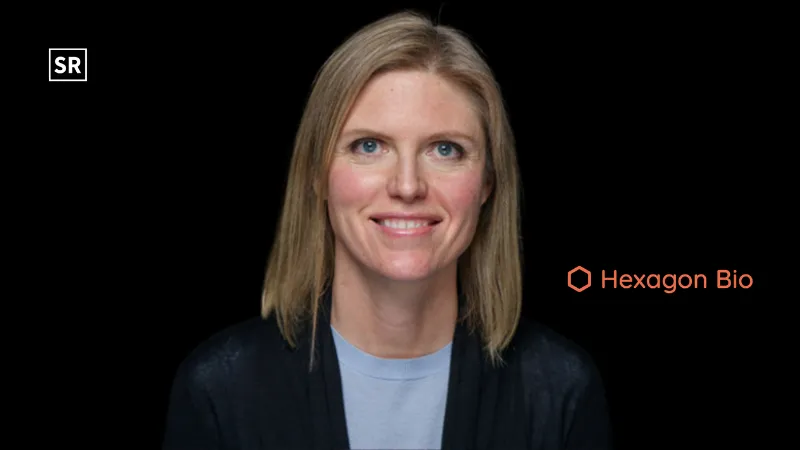
Hexagon Bio, a Menlo Park, CA-based biopharmaceutical company providing new payload mechanisms for antibody-drug conjugates (ADCs), has raised $62 million in a Series C funding round led by The Column Group.
The round also saw participation from Nextech Invest, Deviation Capital, 8VC, and Canada Pension Plan Investment Board (CPP Investments).
The company plans to use the funding to support the Phase 1 clinical trial of HEX-360 and advance additional payload mechanisms and dual-payload candidates from its proprietary discovery platform.
What is Hexagon Bio?
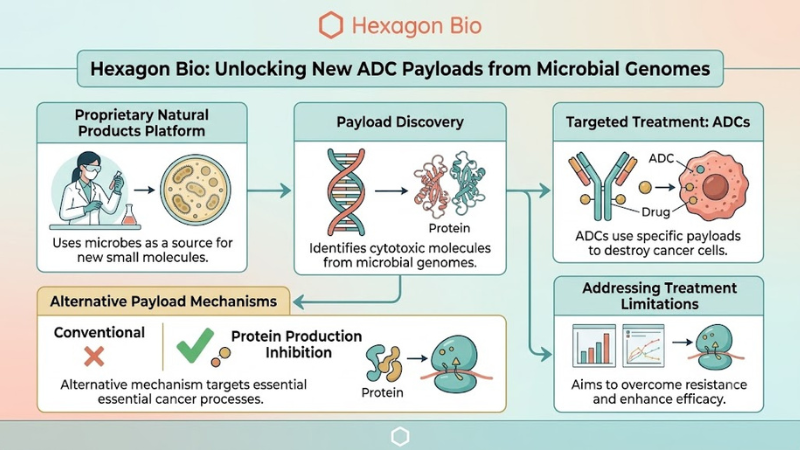
Hexagon Bio is a biopharmaceutical company focused on discovering new payloads for antibody-drug conjugates, a type of targeted cancer treatment that delivers drugs to cancer cells.
Read More:DropGenie Raises $5M in Seed+ Funding for Gene Editing
The company uses a proprietary natural products platform to identify cytotoxic small molecules from microbial genomes. These molecules can be developed as payloads for ADCs, with the aim of addressing limitations in existing cancer treatments.
Hexagon Bio is developing alternative payload mechanisms designed to target other essential processes in cancer cells, including protein production.
RECOMMENDED FOR YOU

RoboForce Secures Additional $5M, Total Funding Reaches $15M to Accelerate AI Robotics Expansion
Startuprise
May 20, 2025

How Much Funding Has Hexagon Bio Raised?
Hexagon Bio has raised $62 million in its latest Series C funding round.
The company did not disclose its total funding to date or details of previous rounds in the announcement.
Who Invested in Hexagon Bio’s Series C Round?
The $62 million Series C round was led by The Column Group.
Other participating investors include:
- Nextech Invest
- Deviation Capital
- 8VC
- Canada Pension Plan Investment Board (CPP Investments)
The announcement did not specify which investors were new and which were existing backers.
Why the Funding Matters
Hexagon Bio will use the funding to support the Phase 1 clinical trial of HEX-360 and advance additional payload mechanisms and dual-payload candidates from its platform.
HEX-360 is a HER2-targeting antibody-drug conjugate featuring a novel translation inhibitor payload discovered by Hexagon Bio. Unlike commonly used ADC payloads, which target mechanisms such as topoisomerase or tubulin inhibition, its payload is designed to suppress the production of proteins involved in cancer growth.
Who founded Hexagon Bio?
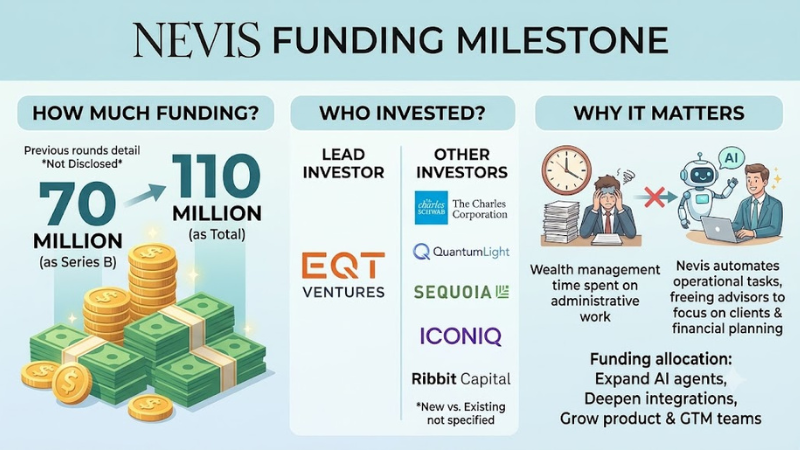
Hexagon Bio was founded by Maureen Hillenmeyer. The company is based in Menlo Park, California. The announcement did not specify its founding year.
The company focuses on discovering new small molecules from microbial genomes and developing them into potential payloads for targeted cancer therapies.
"This financing reflects our conviction that the next generation of ADCs will be focused on novel payloads that can transform the treatment paradigm for many cancers," said Maureen Hillenmeyer, Ph.D., co-founder and Chief Executive Officer of Hexagon Bio.
“To push the boundaries of what ADCs can achieve for patients, the industry needs to look beyond existing payloads,” said Scott Garland, Chairman of Hexagon Bio’s Board of Directors. “Hexagon’s rapid progress in advancing HEX-360 toward the clinic, while simultaneously discovering orthogonal payload mechanisms, demonstrates the unique power of their platform.”
Market and Business Growth
Hexagon Bio is advancing its ADC payload discovery platform, with HEX-360 among its development programmes.
Preclinical data presented at the American Association for Cancer Research (AACR) Annual Meeting in 2026 showed that HEX-360 demonstrated equivalent or superior efficacy to a comparator designed to be analogous to ENHERTU at matched payload exposure in cell-line, and patient-derived xenograft models.
The company also reported deep and durable responses in models resistant to topoisomerase inhibitors, along with good tolerability in rat, and non-human primate models. These findings are preclinical and do not establish the treatment's safety or effectiveness in humans.
What Happens Next?
Hexagon Bio plans to use the new funding to support the Phase 1 clinical trial of HEX-360 and advance additional payload mechanisms and dual-payload candidates.
The company will continue developing its natural products discovery platform to identify new ADC payloads that could address treatment resistance and other challenges in cancer care.
Read More:Nevis Raises $70M in Series B Funding Led by EQT Ventures
Recommended Stories for You

Team SR Jul 16, 2024
Devin Jacobs Apr 1, 2024
Devin Jacobs Feb 9, 2024

Devin Jacobs May 18, 2026

Team SR Jul 27, 2024

Devin Jacobs Jun 9, 2026
Trending Stories

[Funding alert] MaintainX Secures $50 Mn Funding led by Bain Capital Ventures

Peugeot Invest commits $175M stake in Mérieux NutriSciences

AskElephant Raises $6M to Redefine Revenue Team Workflows with Human-Centered AI

Goodfire Raises $50M Series A to Advance AI Interpretability and Launch Ember Platform

FLORA Raises $42M in Series A Funding
Top Funding Wrap Of The Week – 12 October – 16 October 2026
SpaceX to launch Starship into Orbit for First Time

Rogo Raises $75M in Series C Funding

