

How Much Does It Cost to Register for VAT in the UK? Fees, Rules and Requirements in 2026
Nov 5, 2026 | By Devin Jacobs
 Follow us
 Follow us
If you run a business in the UK, you may need to register for Value Added Tax (VAT) as your business grows. VAT registration becomes necessary when your sales reach a certain level. Some businesses also choose to register voluntarily.
But one common question many business owners ask is: How much does it cost to register for VAT in the UK?
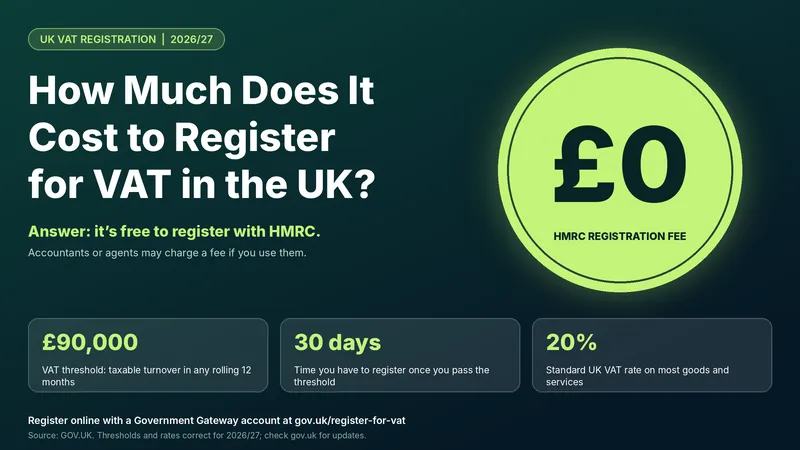
The good news is that registering for VAT directly through HM Revenue and Customs (HMRC) is completely free. You do not need to pay any government fee to submit your application. However, you may have other expenses if you hire an accountant, use VAT accounting software or need help preparing your VAT returns.
In this guide, we explain VAT registration costs in the UK in 2026, who needs to register, how to apply and what other expenses you should consider.
How Much Does VAT Registration Cost in the UK?
Registering for VAT in the UK costs £0 if you apply directly through HMRC. The government does not charge businesses for VAT registration.
However, you may have to spend money on other services to manage your VAT records and payments.
Here is a simple breakdown of the possible costs:
| VAT-related expense | Typical cost |
| HMRC VAT registration | Free |
| Online VAT application | Free |
| Accountant assistance | Depends on the accountant |
| VAT accounting software | Depends on the provider |
| VAT return preparation | Depends on the service |
| Late filing or payment penalties | May apply |
If you manage your accounts yourself and use suitable software, you may not need to hire an accountant. However, businesses with more complicated finances may find professional help useful.
Remember, registering for VAT is free, but managing your VAT records and submitting returns may involve extra costs.
What Is the VAT Registration Threshold in the UK in 2026?
The VAT registration threshold in the UK is £90,000 in taxable turnover.
This means you must register for VAT if your business's taxable sales go above £90,000 during any rolling 12-month period.
You must also register if you expect your taxable sales to go above £90,000 in the next 30 days alone.
The threshold is based on business sales, not profit.
For example:
- If your business makes £95,000 in taxable sales over 12 months, you must register for VAT.
- If your business makes £75,000 in taxable sales, you normally do not need to register.
- If you expect to receive £100,000 from a taxable contract within the next 30 days, you may need to register immediately.
Businesses with sales below £90,000 can also choose to register voluntarily.
There is a separate rule for businesses based outside the UK. Overseas businesses making taxable sales in the UK may need to register even if their turnover is below £90,000.
Who Needs to Register for VAT?
Not every UK business needs to register for VAT straight away. It depends on how much you sell, what products or services you provide and where your business operates.
You normally need to register if:
- Your taxable sales go above £90,000 in a rolling 12-month period.
- You expect your taxable sales to exceed £90,000 within the next 30 days.
- You run a business outside the UK but make taxable sales in the UK.
- You take over another business and its sales mean you need to register.
Businesses that only sell VAT-exempt goods or services generally do not need to register under the normal turnover rules.
In some cases, businesses can ask HMRC for an exception if their turnover goes above the threshold temporarily and they expect it to fall below the deregistration threshold in the next 12 months.
It is important to check your business activities and sales before deciding whether VAT registration is necessary.
How to Register for VAT in the UK
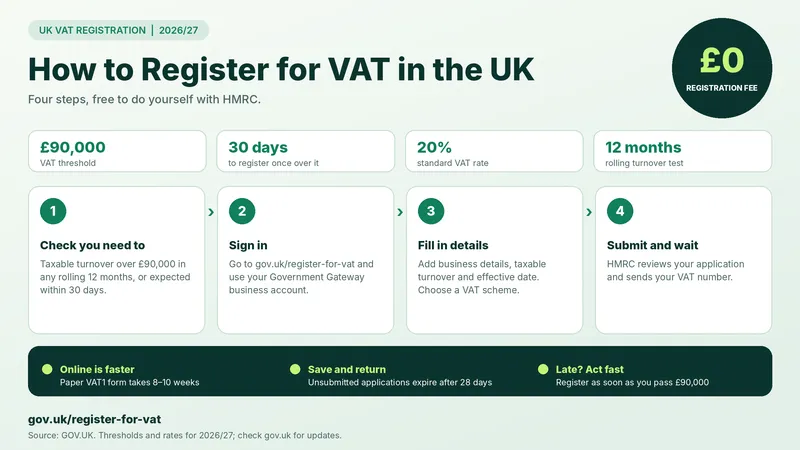
Registering for VAT is not difficult. Most businesses can complete the application online through the HMRC website.
Here are the steps you need to follow.
Step 1: Create or log in to your Government Gateway account
You will generally need a Government Gateway account to use HMRC's online VAT registration service.
Step 2: Collect your business details
Before starting your application, make sure you have the following information:
- Business name and address
- Business bank account details
- National Insurance number, if required
- Company registration number, if you run a limited company
- Details about your business activities
- Estimated taxable turnover
- The date your business crossed or expects to cross the VAT threshold
Step 3: Complete the VAT registration form
Visit the official GOV.UK website and fill in the VAT registration application with your business details.
Step 4: Check and submit your application
Review all the information carefully to make sure everything is correct. Once you are happy with the details, submit your application to HMRC.
Step 5: Receive your VAT registration details
After processing your application, HMRC will provide your VAT registration number and registration information.
You must then follow the VAT rules from your official registration date.
You can apply directly through GOV.UK – Register for VAT without paying a registration fee.
Do You Need an Accountant to Register for VAT?
No. You do not need an accountant to register for VAT in the UK. You can complete the application yourself through the HMRC website.
However, hiring an accountant can make things easier, especially if your business has complicated accounts, international customers or different VAT rates.
An accountant can help you with:
- Completing your VAT registration application.
- Choosing a suitable VAT accounting scheme.
- Checking your taxable turnover.
- Preparing and submitting VAT returns.
- Finding out which business expenses allow you to reclaim VAT.
- Making sure your business follows HMRC rules.
If your business has simple accounts, you may be able to manage VAT registration and returns yourself. But if you are unsure about VAT rules, professional advice can help you avoid mistakes.
Read Also- Best Card Reader for Small Business: Top 5 Options Compared
What Other Costs Should You Consider After VAT Registration?
RECOMMENDED FOR YOU



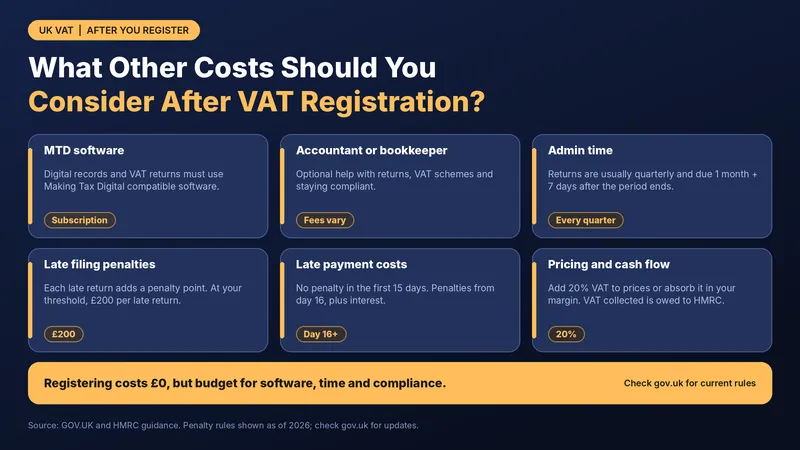
Although VAT registration is free, there are other expenses you may need to pay once your business becomes VAT registered.
1. VAT accounting software
VAT-registered businesses generally need to follow Making Tax Digital (MTD) rules. This means keeping digital records and submitting VAT returns through compatible software.
Some accounting platforms include VAT features in their normal subscription plans. Others charge an additional fee.
2. Accountant fees
If you hire an accountant to manage your VAT returns, you will need to pay for their services.
The cost depends on your business size, number of transactions and the amount of accounting work required.
3. Bookkeeping costs
If your business has regular sales and purchases, you need to keep accurate financial records.
You may manage this work yourself or hire a bookkeeper to organise invoices, payments and other financial information.
4. VAT payments
Once registered, you may need to collect VAT from customers and pay it to HMRC.
You can normally deduct eligible VAT paid on business purchases from the VAT collected from customers. The remaining amount is what you generally need to pay HMRC.
These costs are separate from the VAT registration fee, so include them when planning your business budget.
Is Voluntary VAT Registration Worth It?
If your taxable turnover is below £90,000, you can still choose to register for VAT voluntarily.
However, it is important to understand the advantages and disadvantages before making a decision.
Benefits of voluntary VAT registration:
- You can reclaim eligible VAT on business purchases.
- It helps you keep better financial records.
- It may make your business more attractive to some business customers.
- You can prepare for future growth before reaching the registration threshold.
Disadvantages of voluntary VAT registration:
- You may need to add VAT to your products or services.
- Your prices could become higher for customers who cannot reclaim VAT.
- You must maintain digital VAT records.
- You need to submit VAT returns regularly.
- You may have additional accounting and software expenses.
For example, if most of your customers are VAT-registered businesses, voluntary registration could be useful because they may be able to reclaim the VAT you charge them.
However, if you mainly sell to individual customers, adding VAT could make your products or services more expensive.
The right choice depends on your customers, business expenses and future plans.
What Happens If You Register for VAT Late?
If your business crosses the £90,000 VAT threshold, you must register within the required time.
Normally, you have 30 days from the end of the month in which your taxable turnover goes above the threshold to apply.
If you do not register on time, HMRC may ask you to pay VAT from the date you should have registered. You may also face a late registration penalty.
This can create problems because you might have to pay VAT on previous sales even if you did not charge your customers at the time.
To avoid this situation, keep checking your business sales every month. This will help you know when you are getting close to the VAT threshold.
Frequently Asked Questions
1. Is VAT registration free in the UK?
Yes. Registering for VAT directly through HMRC is free. You do not need to pay a government fee to submit your application.
2. How much does it cost to register for VAT through an accountant?
There is no fixed fee for using an accountant. The cost depends on the accountant, your business size and the services you need.
3. Can I register for VAT myself?
Yes. You can register your business yourself through the HMRC website. You generally need a Government Gateway account and your business details.
4. What is the VAT registration threshold in 2026?
The VAT registration threshold in the UK is £90,000 in taxable turnover over a rolling 12-month period. You must also register if you expect to exceed this amount within the next 30 days.
5. How long does VAT registration take?
HMRC aims to send your VAT registration certificate within 30 days in normal circumstances. However, the time can vary depending on your application and whether HMRC needs more information.
6. Do sole traders need to register for VAT?
Yes. Sole traders must register if their taxable turnover exceeds £90,000 or they expect to cross the threshold within the next 30 days. They can also register voluntarily.
7. Do I need to pay VAT immediately after registering?
You must account for VAT from your effective registration date. Most businesses submit VAT returns every three months and pay any VAT due by the relevant deadline.
Final Thoughts
Registering for VAT in the UK is free if you apply directly through HMRC. However, you should consider other expenses such as accounting software, bookkeeping and accountant fees when planning your business finances.
The current VAT registration threshold is £90,000, so it is important to keep track of your taxable sales as your business grows.
Whether you run a sole trader business, a startup or an established company, understanding VAT registration costs and rules can help you manage your money, avoid penalties and stay compliant with HMRC.
SEO Details
SEO Title: How Much Does It Cost to Register for VAT in the UK? (2026)
Meta Description: Find out how much it costs to register for VAT in the UK in 2026. Learn about HMRC fees, VAT thresholds, accountant costs and registration rules.
Primary Keyword: How much does it cost to register for VAT
Secondary Keywords:
- VAT registration cost UK
- VAT registration fees UK
- How to register for VAT
- HMRC VAT registration
- VAT registration threshold 2026
- VAT registration for sole traders
- Voluntary VAT registration
- VAT accountant costs UK
Suggested URL Slug: how-much-does-it-cost-to-register-for-vat
Suggested Internal Linking Topics:
- What is VAT in the UK?
- How to calculate VAT
- Best accounting software for small businesses UK
- VAT threshold for small businesses
- Making Tax Digital explained
This article covers UK VAT rules and guidance available in November 2026. It is general information and should not be treated as individual tax advice.
Recommended Stories for You

Devin Jacobs Sep 14, 2026

Devin Jacobs Jan 2, 2024
Devin Jacobs Oct 24, 2026

Devin Jacobs Oct 20, 2026

Devin Jacobs Dec 11, 2025

Devin Jacobs Oct 26, 2026
Trending Stories
How to Start a Tech Consulting Business

Susan Dell Net Worth 2026: Business Career, Wealth and Philanthropy

The Rise of Early-Stage Semiconductor Startups in the USA: Powering the Next Tech Revolution

What Companies Does Bill Gates Own? Complete List of His Investments and Businesses
Top 8 Quantum Computing Startups in the USA to Watch in 2026
Joe Wicks Net Worth in 2026: How The Body Coach Built His Fitness Business
Top 10 Facility Management Companies in the World (2026)

Most Valuable Latin American Brands by Brand Value in 2026

