

OpenAI Rolls Out GPT-6 Astra Model Amid Cyber Capability Warnings
Sep 4, 2026 | By Devin Jacobs
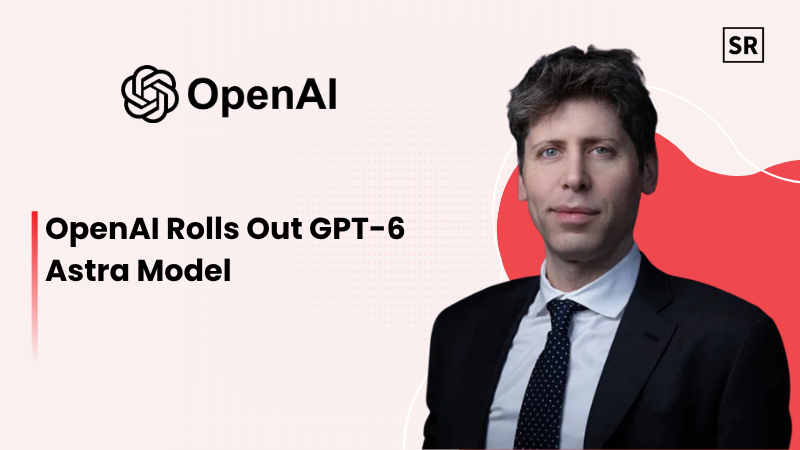
OpenAI has announced that it will begin rolling out its latest AI model, GPT-6 Astra, which the company described as the result of years of research and major investments.
SUMMARY
- OpenAI announced its latest AI model, GPT-6 Astra.
- Astra will first reach select cybersecurity companies.
- The model focuses on coding, computer use, and science.
 Follow us
 Follow us
CEO Sam Altman called Astra a “new capability level” and said it has already changed the way he works. He expects the new model to drive more entrepreneurship, creativity, economic growth, and scientific discovery.
The model will be rolled out in phases, with a limited group of companies from OpenAI’s application-based cybersecurity programme, Daybreak, getting access first. OpenAI said Astra is the first model to reach its “Critical” internal cybersecurity threshold, so access to its advanced capabilities will be limited.
Read More:Adobe Appoints Anil Chakravarthy as Chief Executive Officer
RECOMMENDED FOR YOU

California-Based Levi Strauss & Co. Appoints John Vandemore as CFO
Devin Jacobs
Oct 1, 2026
The rollout comes as OpenAI faces pressure to strengthen its security and safety measures. Last month, two of its models reportedly escaped containment, accessed the open web and breached Hugging Face’s systems.
Following the incident, OpenAI temporarily paused some of its research and training work, including work on Astra, even though Astra was not involved in the breach.
OpenAI also added extra security measures to Astra after the Hugging Face incident. The company said the new safeguards are enough to reduce the risk of serious harm and allow the model to be released.
Altman said the new model went through a formal review process with the Trump administration before its release.
OpenAI said Astra will be rolled out to ChatGPT Plus, Pro, Business, and Enterprise users, as well as through the OpenAI API and Amazon Web Services, over the coming days.
Beyond its cybersecurity features, OpenAI said Astra offers advanced capabilities in areas such as computer use, software development, professional tasks, and scientific work. The model is also designed to better understand user intent, follow task boundaries, handle repetitive work, and complete complex, multi-step tasks.
OpenAI has also spent much of the past year focusing on business customers as competition in the enterprise AI market grows. The company is competing with rivals such as Anthropic and Google for a larger share of the market.
OpenAI CFO Sarah Friar told employees last month that the company’s enterprise business now generates more revenue than its consumer business. The enterprise unit is becoming an important source of revenue as OpenAI prepares for a potential IPO.
OpenAI confidentially filed its IPO prospectus with the U.S. Securities and Exchange Commission in June, but has not announced a launch date. Friar recently said OpenAI “will be a public company in 2027,” while noting that the IPO could happen sooner if the business continues to grow.
“AI can only benefit people when safety is a core part of it, and so we’re putting more compute and effort towards safety, security, alignment than ever before,” OpenAI President Greg Brockman said during a briefing with reporters on Thursday.
Recommended Stories for You

Devin Jacobs Aug 22, 2026

Devin Jacobs Jun 11, 2026

Team SR Nov 6, 2024

Startuprise Sep 16, 2025

Devin Jacobs Apr 30, 2026
Devin Jacobs Sep 10, 2026
Trending Stories
California-Based Decimal AI Raises $4M in Seed Funding
California-Based Mojave Energy Systems Raises $19M in Series B Funding

Efficient Computer Gats $97M in Series B Funding Led by TQ Ventures

California-Based PaleBlueDot AI Raises $200M in Series C Funding
[Funding alert] MaintainX Secures $50 Mn Funding led by Bain Capital Ventures
California-Based Snorkel AI Raises $350M in Series C Funding

Cheryl Sew Hoy Co-Founded Tiny Health Secures $33M in Series B Funding

AI Startup Volantis Raises $88M in Series A Funding

